
Introduction
Chicken Breast Protein
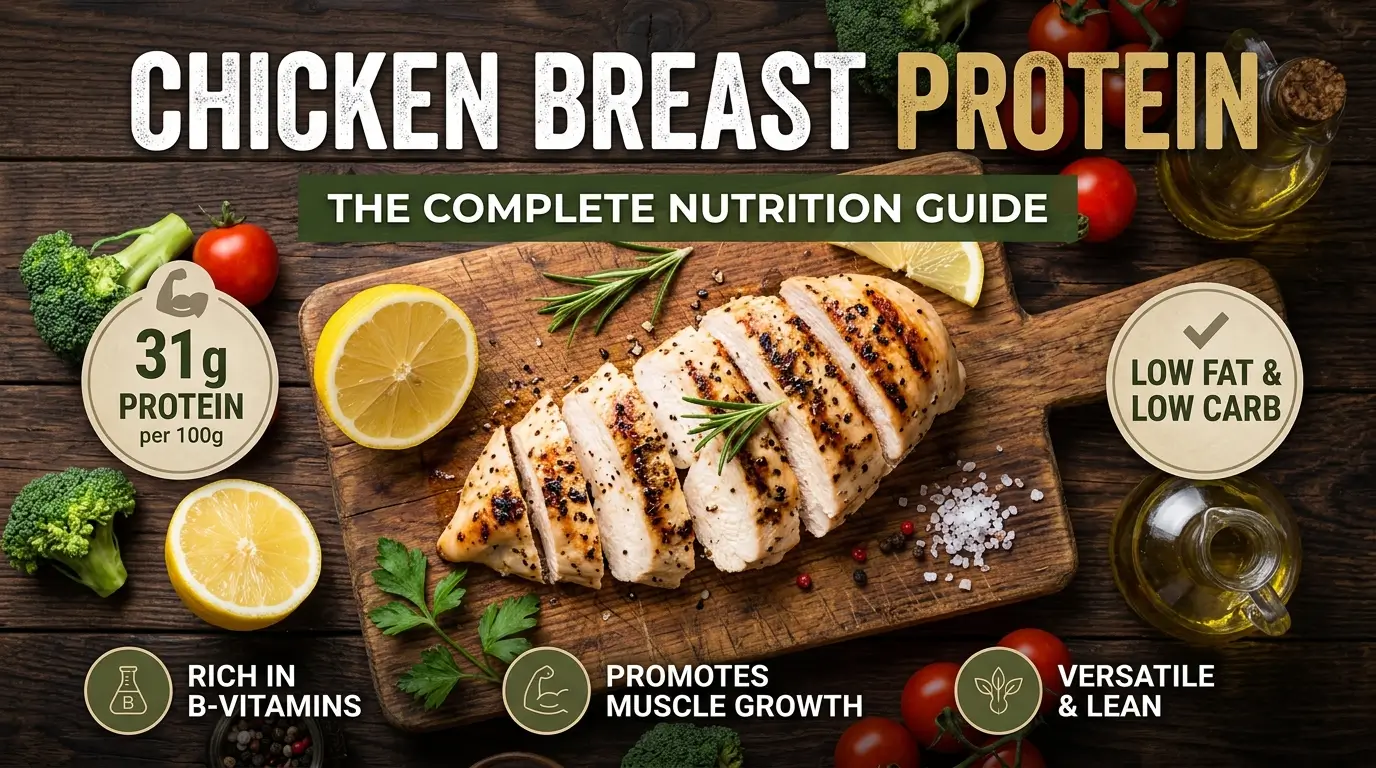
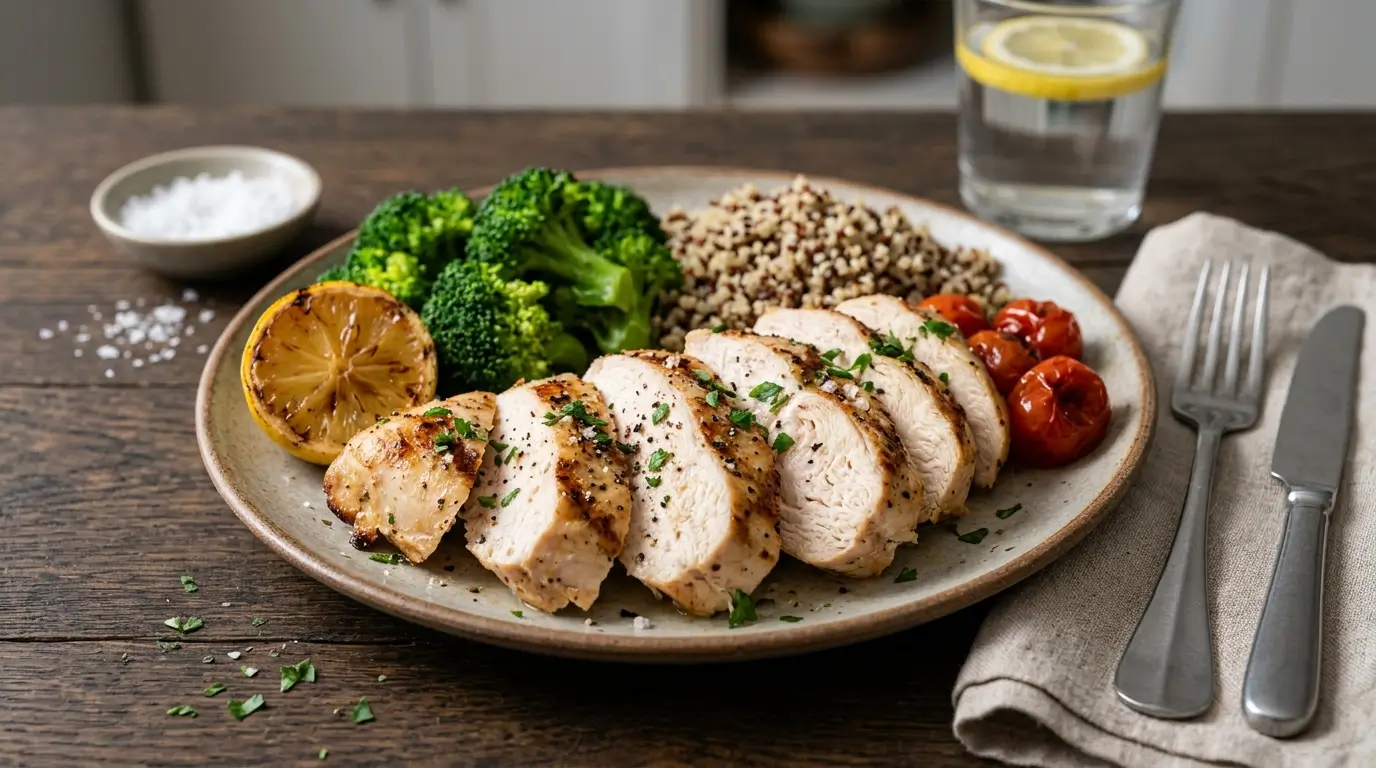
If you’ve ever tracked your macros, followed a high-protein diet, or tried to build muscle, you’ve almost certainly heard the same advice: eat more chicken breast.
But how much protein does chicken breast actually contain? How does it stack up against other proteins? And does cooking method affect how much protein you actually absorb?
This guide answers all of it — with real numbers, practical meal ideas, and everything you need to make chicken breast work for your goals.
Why Chicken Breast Is the King of Protein

The Protein-to-Calorie Ratio
What makes chicken breast stand out isn’t just the protein content — it’s the ratio of protein to calories. Very few whole foods deliver this much protein for this few calories. A 4-ounce serving gives you roughly 35 grams of protein for around 185 calories, with almost no fat and zero carbohydrates.
For anyone counting macros, building lean muscle, or managing their weight, that ratio is hard to beat.
Complete Protein
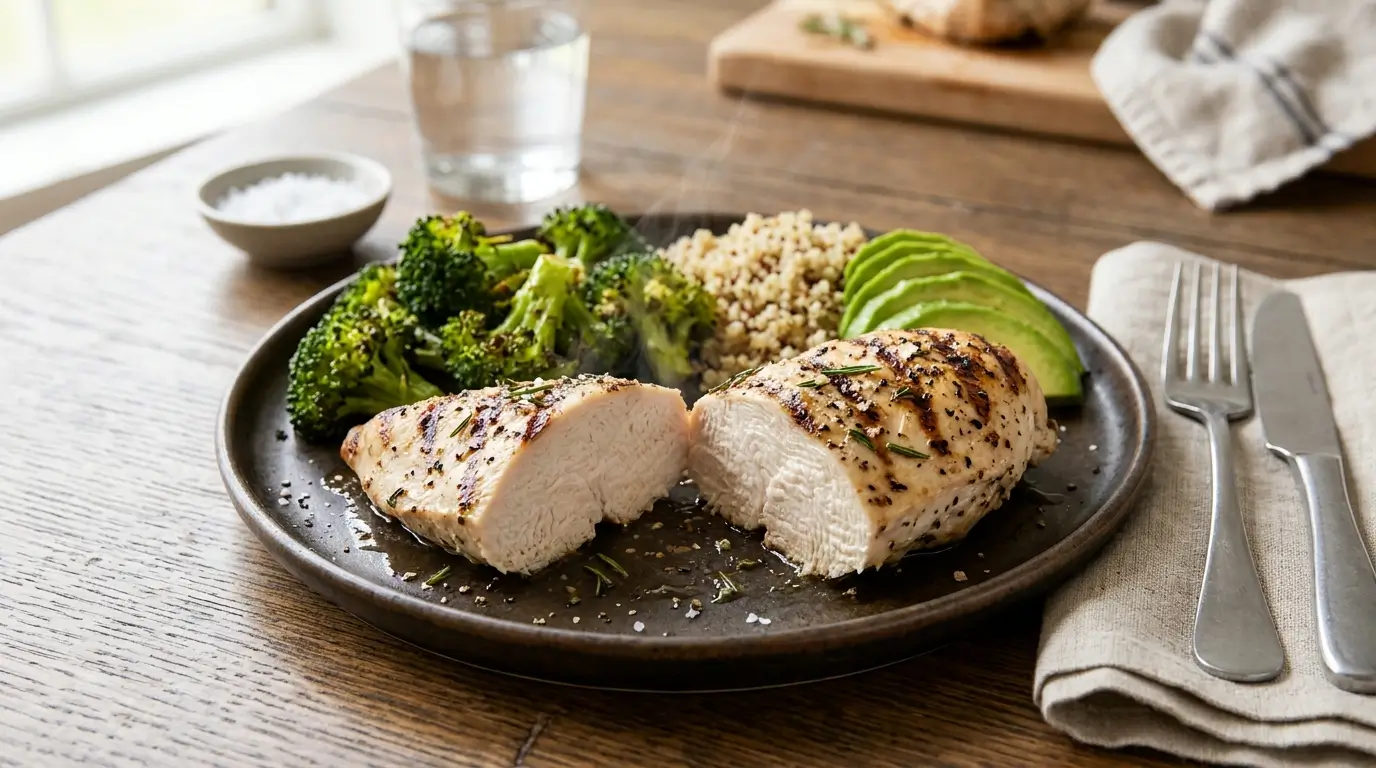
Chicken breast is a complete protein, meaning it contains all nine essential amino acids your body cannot produce on its own. This includes leucine, the amino acid most directly linked to triggering muscle protein synthesis — the process by which your muscles actually grow and repair after exercise.
Versatility
Unlike protein supplements or highly processed protein foods, chicken breast is a whole food that fits into almost any cuisine, diet style, or meal format — grilled, baked, shredded, sliced, or diced.
Nutrition Facts
Protein Content by Serving Size
| Serving Size | Protein | Calories | Fat | Carbs |
|---|---|---|---|---|
| 1 oz (28g) | 9g | 46 | 1g | 0g |
| 3 oz (85g) | 26g | 140 | 3g | 0g |
| 4 oz (113g) | 35g | 185 | 4g | 0g |
| 6 oz (170g) | 53g | 278 | 6g | 0g |
| 8 oz (227g) | 70g | 370 | 8g | 0g |
Values are approximate for cooked, boneless skinless chicken breast.
How It Compares to Other Proteins
| Food | Protein per 100g | Calories per 100g |
|---|---|---|
| Chicken breast | 31g | 165 |
| Turkey breast | 29g | 135 |
| Tuna (canned) | 29g | 132 |
| Salmon | 25g | 208 |
| Eggs | 13g | 155 |
| Greek yogurt | 10g | 97 |
| Black beans | 9g | 132 |
| Tofu (firm) | 8g | 76 |
Chicken breast leads the pack in protein per 100g among whole food sources — with a calorie count that stays low even at large portions.
Full Micronutrient Profile (per 4 oz cooked)
- Niacin (B3): 14mg — 85% of daily value — supports energy metabolism
- Selenium: 32mcg — 58% DV — powerful antioxidant
- Phosphorus: 220mg — 32% DV — supports bone health
- Vitamin B6: 0.9mg — 53% DV — supports brain function
- Zinc: 1.1mg — 10% DV — immune support
- Iron: 0.9mg — 5% DV
How Much Protein Do You Actually Need?
General Guidelines
Protein needs vary based on body weight, activity level, and goals. Here are the most widely used benchmarks:
- Sedentary adults: 0.36g per pound of body weight (0.8g/kg)
- Active adults: 0.6–0.8g per pound (1.3–1.8g/kg)
- Muscle building: 0.7–1.0g per pound (1.6–2.2g/kg)
- Weight loss while preserving muscle: 0.8–1.2g per pound (1.8–2.6g/kg)
How Many Chicken Breasts Is That?
For a 170-pound (77kg) active adult aiming to build muscle at 1g per pound, that’s 170g of protein per day. A single 6-ounce cooked chicken breast delivers about 53g — meaning roughly three portions of chicken breast would cover the full daily target, leaving room for protein from other sources throughout the day.
Spreading It Out Matters
Research suggests your body can only use about 30–40 grams of protein for muscle synthesis in a single sitting. Spreading your intake across 3–4 meals is more effective than loading it all into one. Chicken breast is easy to portion and prep in advance, making it ideal for this approach.
Best Ways to Cook It for Maximum Protein Retention
Does Cooking Method Affect Protein?
Yes — but perhaps not in the way you’d expect. Cooking does not destroy protein, but it does change the structure of the amino acids through a process called denaturation. The practical impact on protein quantity is minimal. What cooking method does affect significantly is moisture retention — and a drier, overcooked chicken breast is far less enjoyable to eat, which means you eat less of it.
Best Methods Ranked
1. Poaching — Lowest calorie addition, highest moisture retention. Ideal for meal prep and shredding. Simmer gently in broth at 160°F until just cooked through.
2. Baking at high heat (400–425°F) — Quick, hands-off, and reliable. A 6-oz breast takes 20–22 minutes. Use a thermometer and pull at 160°F — carryover cooking brings it to 165°F.
3. Pan searing — Best flavor and crust. The Maillard reaction creates golden, caramelized surface flavor that no other method replicates. Rest 5 minutes before slicing.
4. Grilling — Great flavor, slight protein oxidation from high direct heat, but nutritionally negligible. Excellent for meal variety.
5. Air frying — Fast, crispy exterior without added oil. 375°F for 15–18 minutes depending on thickness.
What to Avoid
- Overcooking past 165°F is the single biggest mistake. Each degree above 165°F squeezes more moisture out and makes the texture tougher.
- Skipping the rest period. Cutting immediately after cooking releases all the retained juices onto the cutting board, not into your mouth.
Meal Ideas & Pairings
High-Protein Meal Combinations
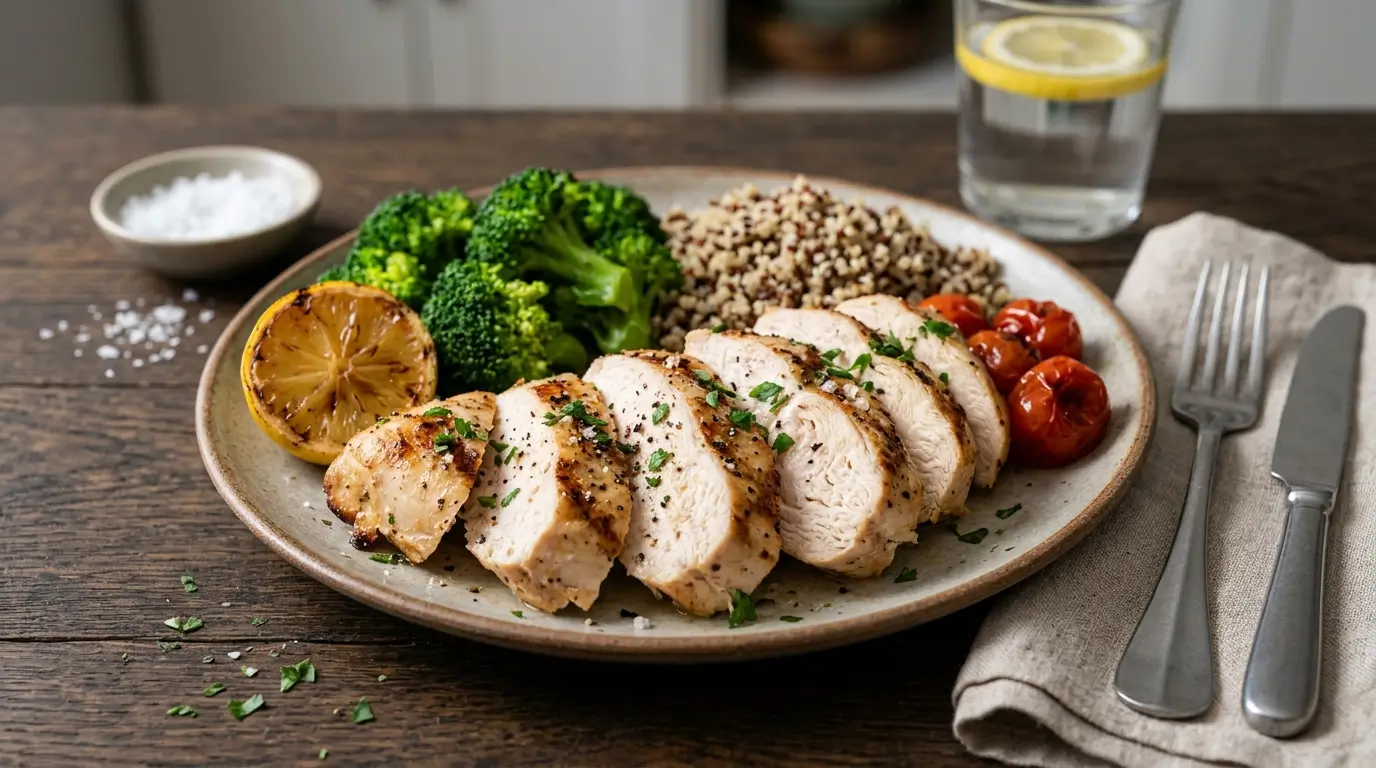
Pair chicken breast with these sides to hit your daily protein targets while keeping meals balanced and satisfying:
- Chicken breast + authentic Mexican rice + black beans — ~55g protein, balanced carbs, high fiber
- Chicken breast + quinoa + roasted vegetables — ~50g protein, complete amino acids from both sources
- Chicken breast + Greek yogurt dressing + mixed greens — ~45g protein, low calorie, high volume
- Chicken breast + sweet potato + steamed broccoli — ~48g protein, excellent micronutrient density
Meal Prep Ideas
- Poach a batch on Sunday and portion into containers for the week — salads, wraps, rice bowls, or straight from the fridge
- Slice and freeze in individual portions for quick weeknight dinners
- Shred after poaching and use as a base for tacos, enchiladas, soups, or sandwiches
Who Benefits Most
- Athletes and gym-goers building or maintaining muscle mass
- Anyone on a calorie deficit who needs to stay full without excess calories
- Busy home cooks who want reliable, versatile protein that works with any cuisine
- Families looking for a crowd-pleasing, budget-friendly protein anchor for weeknight meals