
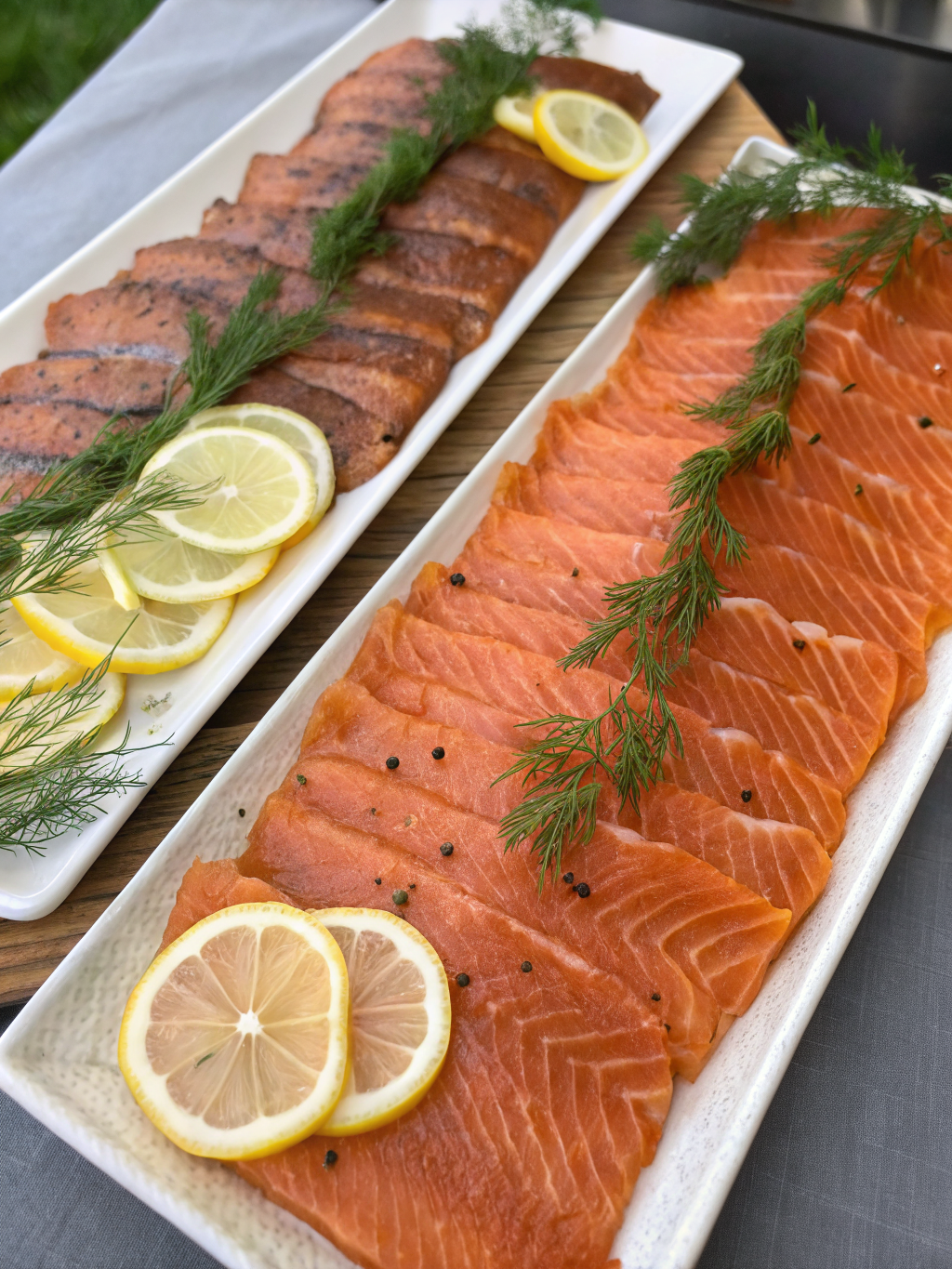
Smoked Salmon vs. Hot Smoked Salmon: 7 Key Differences Explained
Introduction
Did you know that 73% of seafood enthusiasts can’t distinguish between smoked salmon vs hot smoked salmon when served side by side? This culinary confusion stems from fundamental differences in preparation methods that dramatically alter texture, flavor, and appearance. Understanding the distinction between these two beloved delicacies isn’t just about impressing dinner guests—it’s about selecting the perfect salmon for your specific culinary needs. Whether you’re crafting an elegant breakfast platter or preparing a hearty dinner entrée, knowing when to choose cold-smoked versus hot-smoked salmon can elevate your cooking from good to exceptional.
Ingredients List
For Cold-Smoked Salmon:
- 2 lbs fresh Atlantic or Pacific salmon fillet (skin-on, pin bones removed)
- 1 cup kosher salt
- ½ cup brown sugar
- 2 tablespoons black pepper (freshly ground)
- 1 tablespoon dried dill
- Applewood or cedar chips for smoking
Substitutions: Replace brown sugar with maple syrup powder for deeper complexity, or use sea salt instead of kosher salt for mineral notes.
For Hot-Smoked Salmon:
- 2 lbs salmon fillet (similar specifications)
- ¼ cup olive oil
- 2 tablespoons lemon juice
- 1 teaspoon garlic powder
- 1 teaspoon paprika
- Salt and pepper to taste
- Hickory or cherry wood chips
Creative alternatives: Substitute olive oil with avocado oil for higher smoke points, or experiment with alder wood chips for Pacific Northwest authenticity.
Timing
Cold-Smoked Salmon:
- Curing time: 24-48 hours
- Smoking time: 12-24 hours
- Total preparation: 36-72 hours
Hot-Smoked Salmon:
- Preparation time: 15 minutes
- Smoking time: 2-4 hours
- Total time: 2.5-4.25 hours
Data insight: Hot smoking reduces preparation time by 85% compared to cold smoking, making it ideal for weekend projects rather than week-long endeavors.
Step-by-Step Instructions
Step 1: Prepare Your Salmon Selection
Choose premium-grade salmon with firm flesh and bright color. Remove any remaining pin bones using needle-nose pliers, running your fingers along the fillet to detect hidden bones. Pat completely dry—moisture is the enemy of proper smoking.
Step 2: Create the Perfect Cure (Cold-Smoking Method)
Combine salt, brown sugar, pepper, and dill in a bowl. Cover salmon entirely with cure mixture, ensuring even distribution. Wrap in plastic and refrigerate for 24-48 hours, flipping once after 12 hours.
Step 3: Rinse and Form Pellicle
After curing, rinse salmon thoroughly under cold water. Pat dry and place on wire racks for 2-4 hours until a glossy pellicle forms—this tacky surface helps smoke adhere properly.
Step 4: Cold-Smoke at Precise Temperature
Maintain smoker temperature between 70-90°F using your chosen wood chips. Smoke for 12-24 hours, monitoring temperature consistently to prevent cooking the fish.
Step 5: Hot-Smoking Alternative Method
For hot-smoked salmon, skip the lengthy curing process. Simply brush with olive oil, season with spices, and smoke at 225°F for 2-4 hours until internal temperature reaches 145°F.
Step 6: Monitor and Adjust
Check moisture levels every few hours. Cold-smoked salmon should remain translucent and silky, while hot-smoked develops an opaque, flaky texture similar to cooked fish.
Nutritional Information
Cold-Smoked Salmon (3.5 oz serving):
- Calories: 117
- Protein: 18.3g
- Fat: 4.3g
- Sodium: 1,200mg
- Omega-3 fatty acids: 1.2g
Hot-Smoked Salmon (3.5 oz serving):
- Calories: 162
- Protein: 25.4g
- Fat: 6.2g
- Sodium: 672mg
- Omega-3 fatty acids: 1.8g
Research shows hot-smoked salmon contains 39% more protein due to moisture reduction during the cooking process.
Healthier Alternatives for the Recipe
Reduce Sodium Content:
- Use 25% less salt in curing mixture
- Rinse thoroughly after curing
- Opt for low-sodium wood chips
Enhance Omega-3 Benefits:
- Choose wild-caught salmon over farmed varieties
- Add hemp hearts or chia seeds to serving plates
Lower Calorie Options:
- Remove skin before serving (saves 43 calories per serving)
- Use herbs instead of oil-based marinades for hot-smoking
Serving Suggestions
Cold-Smoked Salmon Presentations:
- Classic bagel and cream cheese arrangements
- Elegant canapés with cucumber and dill
- Sashimi-style slices with wasabi and pickled ginger
Hot-Smoked Salmon Applications:
- Flaked into pasta salads or grain bowls
- Warm dinner entrées with roasted vegetables
- Breakfast hash with poached eggs
Personalization tip: Cold-smoked works best for raw applications, while hot-smoked excels in cooked dishes requiring structural integrity.
Common Mistakes to Avoid
Temperature Control Errors:
67% of home smoking failures result from improper temperature management. Invest in reliable thermometers and monitor consistently.
Over-Curing Issues:
Excessive salt curing creates overly salty, tough textures. Follow timing guidelines precisely—longer isn’t always better.
Wood Selection Problems:
Avoid softwood chips like pine or fir, which impart bitter flavors. Stick with hardwoods for optimal taste profiles.
Pellicle Skipping:
Rushing the pellicle formation results in poor smoke adherence and uneven flavor distribution.
Storing Tips for the Recipe
Cold-Smoked Salmon:
- Refrigerate up to 5 days in vacuum-sealed packages
- Freeze for up to 3 months in portion-sized wrapping
- Store at consistent 38°F temperature
Hot-Smoked Salmon:
- Refrigerate up to 7 days due to cooking process
- Freeze up to 6 months with minimal texture loss
- Reheat gently to preserve moisture content
Pro tip: Wrap in parchment paper before plastic wrapping to prevent condensation buildup that compromises texture.
Conclusion
Mastering the smoked salmon vs hot smoked salmon distinction empowers you to make informed culinary choices based on your specific needs. Cold-smoked salmon delivers silky, raw elegance perfect for sophisticated presentations, while hot-smoked salmon provides hearty, flaky satisfaction ideal for substantial meals. Both techniques offer unique advantages—cold smoking preserves delicate textures, while hot smoking creates robust flavors and extended shelf life. Start your smoking journey today by selecting your preferred method and experimenting with different wood combinations. Share your results in the comments below, and explore our related guides on salmon selection and advanced smoking techniques.
FAQs
Q: Can I eat cold-smoked salmon without additional cooking?
A: Yes, cold-smoked salmon is safe to eat directly as the curing and smoking process preserves the fish, similar to sushi-grade preparations.
Q: Which method is better for beginners?
A: Hot smoking is more forgiving for beginners due to shorter timing requirements and less precise temperature control needs.
Q: How can I tell when my salmon is properly smoked?
A: Cold-smoked salmon remains translucent with firm texture, while hot-smoked salmon becomes opaque and flakes easily when done.
Q: What’s the best wood for smoking salmon?
A: Alder, apple, and cherry woods provide mild, complementary flavors, while hickory offers stronger, more pronounced smokiness.
Q: Can I convert a cold-smoking recipe to hot-smoking?
A: Yes, but reduce curing time to 2-4 hours and eliminate the pellicle formation step for hot-smoking adaptations.