
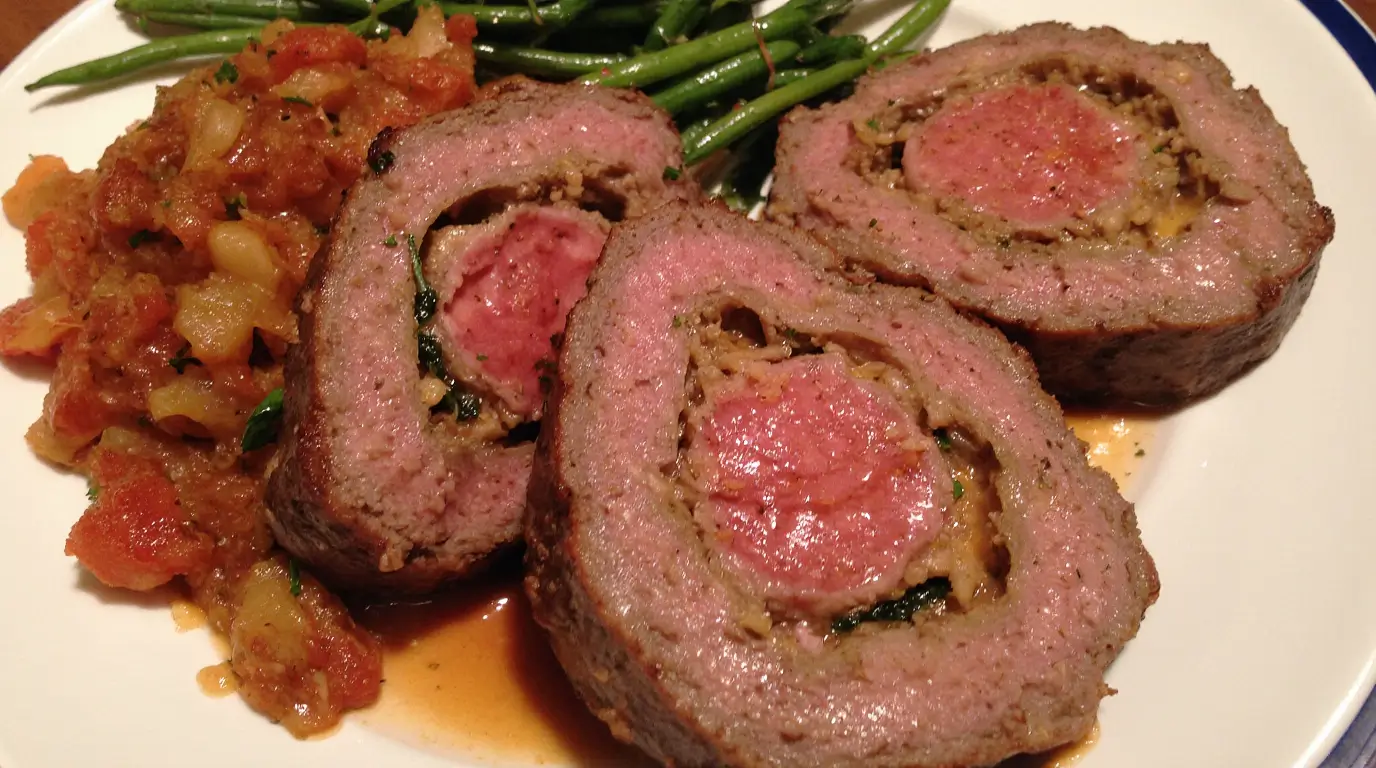
Remember that feeling when you serve a meal that makes everyone stop talking? When the aroma alone bring your family to the table with genuine excitement? That’s the magic we’re creating today.
This guide unlocks the secrets to a spectacular rolled beef dish that looks straight from a fine dining menu. Yet it’s crafted from an affordable cut you can find at any grocery store.
We’ll transform simple ingredients into an unforgettable main course. Imagine tender beef wrapped around a savory filling of melted cheese, salty prosciutto, and fresh herbs.
You’ll master professional techniques, such as butterflying meat and using a thermometer, for achieving perfect doneness. We break everything into clear, manageable steps.
Whether it’s a Sunday supper or a holiday celebration, this entrée delivers gourmet flavor without the restaurant price tag. Let’s create a new family favorite together.
Key Takeaways
- Create an impressive centerpiece meal using an economical cut of beef.
- Master professional techniques like butterflying and proper rolling.
- Customize the savory filling with your favorite Italian-inspired ingredients.
- Use a meat thermometer for reliable, perfect results every time.
- Learn complete guidance from preparation to serving and storage.
- Achieve a restaurant-quality presentation with home kitchen tools.
- Make a tender, flavorful dish that becomes a regular family dinner favorite.
Why You’ll Love This Italian Stuffed Flank Steak
This rolled beef creation offers multiple benefits that make it worth your time. It combines smart shopping with culinary technique. The outcome feels special yet approachable for home cooks.
Some home chefs overlook certain cuts, thinking they lack flavor or tenderness. However, with proper preparation, these economical options shine. As one source notes, this particular cut is “a truly versatile piece of meat that is more cost-effective.”
A Gourmet Meal Without the Gourmet Price
Your main ingredient provides exceptional value compared to premium options. It delivers rich, beefy flavor when prepared correctly. This makes it a smart choice for budget-conscious cooks who still want quality.
The filling components add luxury without high expense. Cheese, herbs, and cured meats offer big taste. Most items might already be in your pantry or fridge.
The final presentation creates a serious visual appeal. A golden-brown exterior gives way to a colorful, cheesy interior when sliced. This “wow” factor makes the dish seem far more expensive than it is.
This cut is an economical choice of meat compared to other steak varieties. Also, this meal would typically be served in a higher-end restaurant that would charge a lot. Get the gourmet meal without the gourmet price.
You can cook vegetables alongside the meat in the same pan. Asparagus or Brussels sprouts work beautifully. This creates a complete meal and simplifies cleanup.
Leftovers reheat wonderfully for next-day lunches. They maintain flavor and texture well. This maximizes the value of your cooking effort.
Perfect for Family Dinners and Special Occasions
This recipe’s versatility is a major strength. It works equally well for casual weeknights and formal gatherings. The same dish comforts your household or impresses visitors.
Preparation becomes an engaging kitchen activity. Rolling and tying the meat can be a fun project. Involve family members to create positive food memories together.
Mastering this technique opens doors to countless variations. Once you know the basic method, you can experiment freely. Change the filling based on seasonal produce or personal cravings.
You gain a reliable, impressive main course for any event. Holiday celebrations, dinner parties, or simple Sunday suppers all benefit. It consistently delivers satisfaction and delicious results.
Understanding Flank Steak: Your Key to Success
Before you even touch a knife, learning about this particular piece of meat is crucial. The entire success of your rolled creation hinges on this knowledge. Think of it as getting to know a new friend before inviting them to dinner.
This specific cut comes from the cow’s abdominal muscles. It has a long, flat shape with very visible lines running through it. These lines are muscle fibers, often called the “grain.”
What Makes Flank Steak a Great Choice
This lean option delivers incredible flavor at a reasonable price. As one source notes, “While this cut of meat will certainly not cost you as much as filet mignon, you can make it seem just as impressive.” Its rich, beefy taste stands up well to bold seasonings and marinades.
Many people mistakenly think it’s always tough. The truth is different. When prepared correctly, it becomes wonderfully tender.
Proper technique transforms everything. Butterflying, pounding, and correctly slicing make it succulent. The leanness means it can dry out if overcooked. A meat thermometer becomes your best friend here.
When shopping, look for a piece weighing 1.5 to 2 pounds. Choose one with relatively even thickness. Minimal silverskin or excess fat is ideal for easy preparation.
Identifying the Grain for a Perfect Roll
Those long parallel lines running the length are the grain. Identifying their direction is your most important visual task. This knowledge guides both butterflying and final slicing.
You must roll your creation with the grain. This means the lines should run the length of your roll. Doing so ensures the bundle holds together during cooking.
After cooking, you’ll slice against the grain. Cutting across those short muscle fibers makes each bite tender. This simple technique defeats any toughness.
How does this compare to similar options? See the table below for a clear breakdown.
| Shape & Size | Broader, flatter, more uniform thickness | Longer, narrower, often irregular |
| Fat Content | Leaner cut with less marbling | More marbling and connective tissue |
| Muscle Fibers | Very obvious long fibers (grain) | Fibers are present but less distinct |
| Best For | Stuffing and rolling, slicing against grain | Quick searing, fajitas, marinating |
| Flavor Profile | Rich beefy flavor, takes well to marinade | Intensely beefy, great for bold sauces |
Flank steak tends to be broader and flatter than skirt steak, with bright red coloring. Flank is also a leaner cut than skirt, with really obvious long muscle fibers running through it. It has the same rich beefy flavor as the skirt and takes to a marinade just as well.
Source 2
Understanding these fundamentals is your foundation. It’s the first and most vital step toward a spectacular result. Now you’re ready to prepare your main ingredient with confidence.
Preparing Your Flank Steak for Stuffing
The success of your rolled creation begins with careful attention to texture and seasoning. This phase transforms your main ingredient into a perfect canvas. Proper technique here ensures everything cooks evenly and holds together beautifully.
Butterflying and Pounding to the Right Thickness
Start by letting your beef sit out for 30 to 60 minutes. This brings it closer to room temperature. Pat it completely dry with paper towels for better browning.
Use a very sharp knife for the next step. Place the piece on a stable cutting board. Identify the thicker side where you’ll make your cut.
Slice horizontally through this thicker part. Keep your blade parallel to the board. Stop about half an inch from the opposite edge.
You want it to open like a book when finished. This technique creates more surface area for your filling. It also helps achieve uniform thickness.
Now prepare for pounding. Place the butterflied meat between two sheets of parchment paper. Use the flat side of a meat mallet for this job.
Gently pound it to an even half-inch thickness. Work from the center outward in steady motions. Avoid aggressive hits that could tear the fibers.
Trim any irregular “tail” ends if needed. Creating a neat rectangle makes rolling much simpler. Your goal is a uniform shape ready for filling.
The Essential Dry Rub Mix
This seasoning blend forms your flavor foundation. It creates a delicious crust during cooking. The right mix also helps the filling adhere properly.
Combine dried oregano with coarse sea salt in a bowl. Add freshly cracked black pepper and dried basil. Include dried rosemary and thyme for herbal notes.
Mix in garlic powder and garlic salt for savory depth. Adjust proportions to match your taste preferences. This dry rub works with many herb combinations.
Generously massage the mixture into both sides of your prepared beef. Make sure every surface gets coated evenly. Let the seasoned meat rest briefly on parchment paper.
Here’s a smart time-saving tip. Cut several lengths of kitchen twine before you start. Place them underneath the seasoned piece on your board.
This setup simplifies the tying process later. You won’t need to lift and reposition the filled bundle. The strings will be ready when you need them.
See how different preparation methods compare in this table. Each approach affects your final result differently.
| Butterflying Only | Thicker cuts needing more surface area | Horizontal slicing without cutting through | Maintaining even thickness can be difficult |
| Pounding Only | Already thin pieces needing tenderizing | Gentle, even pressure with meat mallet | Risk of tearing if pounded too aggressively |
| Butterflying & Pounding | Creating ideal half-inch thickness | Combining both techniques sequentially | Requires careful attention to avoid overworking |
| Trimming & Shaping | Irregular pieces needing uniform rectangles | Careful cutting to create straight edges | Minimizing waste while achieving shape |
These foundational steps set the stage for everything that follows. Your main ingredient becomes properly textured and seasoned. It transforms into a flavor-packed vessel ready for its delicious filling.
Crafting Your Italian Stuffed Flank Steak Filling
Assembling the perfect filling is where your personal touch truly shines. This is your chance to build layers of flavor and texture that will melt into every bite. Let’s explore two fantastic approaches, from a classic combination to a luxurious pesto-based variation.
Each component plays a specific role. Cheeses provide creamy meltiness. Vegetables add sweetness and color. Herbs offer a fresh aroma. A simple binder holds it all together during cooking. Understanding these roles helps you customize with confidence.
Classic Fresh Mozzarella and Spinach Stuffing
This beloved combination is a celebration of fresh, vibrant flavors. It’s a reliable choice that pleases everyone at the table. The ingredients work in perfect harmony.
Start with one cup of fresh mozzarella, either shredded or cubed. Add half a cup of diced red bell pepper for sweetness. Include a quarter cup of chopped sun-dried tomatoes for a tangy punch.
Next, fold in a generous handful of fresh spinach and two tablespoons of chopped basil. Mince two cloves of garlic for a savory base. These ingredients create a balanced and colorful mix.
For cohesion, you need a binding agent. Whisk one large egg yolk in a small bowl. Stir in three tablespoons of plain bread crumbs. This mixture is your culinary glue.
Combine all components in a large bowl. Gently toss them until everything is evenly distributed. Be careful not to over-mix, especially with delicate fresh mozzarella.
Variation: Walnut Pesto with Prosciutto and Provolone
For a richer, more complex profile, try this elegant alternative. It starts with a homemade walnut pesto that adds incredible depth. This variation feels truly special.
To make the pesto, pulse half a cup of walnuts with two garlic cloves in a food processor. Add a quarter cup of grated Parmesan cheese and a packed cup of fresh basil leaves. Stream in a third of a cup of olive oil until a coarse paste forms.
Spread this pesto evenly over your seasoned meat. Then, layer on thin slices of prosciutto. Follow with roasted red pepper strips and slices of provolone cheese. This creates a stunning, flavorful strata.
Walnut Pesto: walnuts, garlic, Parmesan cheese, fresh basil, olive oil… Flank Steak filling: prosciutto, roasted red peppers, provolone cheese.
Source 2
The Binding Agent: Egg Yolk and Bread Crumbs
Don’t overlook the simple binder. The egg yolk and bread crumbs are essential for a filling that holds its shape. They prevent a runny, messy interior.
The yolk acts as a rich, natural glue. The bread crumbs absorb excess moisture from the vegetables and cheese. Together, they ensure every slice is neat and packed with flavor.
If you’re making the pesto variation, the binder is less critical. The pesto’s oil and the layered prosciutto help everything adhere. The classic mix, however, relies on this combination.
Feel free to make this recipe your own. Swap in different ingredients based on what you love or have on hand. Consider artichoke hearts, kalamata olives, or cheeses like Swiss or Havarti.
When spooning your filling onto the meat, arrange it in a log shape down the center. Align it with the grain. Leave a one-inch border at both short ends to prevent spillage.
The amount may look generous, but it compresses as you roll and cook. This creates a moist, flavorful center. If some filling falls out during rolling, just tuck it back in.
A perfectly sealed log isn’t necessary for a delicious result. The kitchen twine will secure everything. Focus on flavor, and the presentation will follow.
Rolling, Tying, and Cooking to Perfection
Now comes the moment where technique transforms your preparation into a masterpiece. This phase combines precise action with controlled heat to create that beautiful presentation everyone will admire.
Each step builds upon the last. Proper rolling ensures your filling stays secure. Correct tying creates uniform cooking. Accurate temperature monitoring guarantees perfect doneness.
Follow these methods closely. They turn your prepared ingredients into an impressive main course. The results will reward your attention to detail.
How to Roll the Steak with the Grain
Begin with your seasoned meat on the cutting board. The filling should form a neat log down the center. Make sure it aligns with the visible muscle fibers.
Lift one long side and fold it over the filling. Some describe this as creating a taco shape. Others call it a jellyroll style.
Continue rolling tightly until you reach the opposite edge. The grain should run the length of your cylinder. This alignment helps the bundle hold together during cooking.
Use the pre-placed kitchen twine to secure your creation. Tie it at regular two-inch intervals. This creates a uniform shape that cooks evenly.
Trim any excess string. Your rolled beef should feel firm but not overly tight. A little filling may escape at the ends.
Simply tuck it back inside. The twine will keep everything in place. Your creation is now ready for the pan.
Searing and Roasting for Maximum Flavor
Preheat your oven to 425°F. Choose an oven-safe skillet for this process. Cast iron works exceptionally well.
Add two tablespoons of olive oil to the hot pan. Carefully place your tied roll in the center. Sear it for about two minutes on each side.
You want a deep golden-brown crust on all surfaces. This step develops rich flavor through the Maillard reaction. Don’t rush this process.
Once seared, transfer the entire skillet to your preheated oven. The same vessel makes cleanup easier. It also maintains consistent heat.
Roast for 25 to 40 minutes. The exact time depends on your oven and the roll’s thickness. Visual cues are unreliable here.
This is where your meat thermometer becomes essential. Insert the probe into the thickest part of the center. Avoid touching the filling for an accurate reading.
As one source notes, “roast for 30 to 40 minutes or until internal temperature reaches 130°F.” This target ensures the cheese melts properly. The egg in the stuffing also cooks through.
The Final Broil and Using a Meat Thermometer
After roasting, you may want extra browning on the exterior. Switch your oven to the broil setting. Position the skillet about six inches from the element.
Broil for 5 to 10 minutes. Watch closely to prevent burning. This step adds a final layer of color and crisp texture.
Your thermometer provides the only reliable doneness indicator. Stuffed roasts hide their interior condition. The probe tells the true story.
Remove the dish when it reaches 130°F for medium doneness. The temperature will rise 5-10 degrees during resting. This carryover cooking is normal and beneficial.
Never rely on time alone. Oven temperatures vary. Meat thickness differs. Your meat thermometer eliminates guesswork.
USDA Temperature Guide for Doneness
Understanding temperature standards ensures food safety and preferred texture. The USDA provides clear guidelines for beef. These apply to all cuts, including rolled preparations.
For this recipe, 130°F is the ideal target. It yields a juicy, pink center with fully melted cheese. The filling components cook properly at this heat.
After removing from the oven, tent your creation loosely with foil. Let it rest for 10 full minutes. This allows juices to redistribute throughout the meat.
Then slice against the grain for maximum tenderness. Each piece will reveal the beautiful layered filling. Serve immediately while warm.
| Rare | 125°F | Bright red center, very soft | Not recommended (filling may not cook) |
| Medium Rare | 130-135°F | Warm red center, juicy | Ideal target for best results |
| Medium | 140-145°F | Pink center, firm | Acceptable if preferred |
| Medium Well | 150-155°F | Slightly pink center | May result in drier meat |
| Well Done | 160°F+ | No pink, very firm | Not recommended |
USDA says meat is ‘done’ at 145°F. For this stuffed flank steak recipe, pull it at 130°F and let it rest. The temperature will continue to rise to a safe level while the cheese gets perfectly melty.
Source 1
Following this temperature guide guarantees success. Your rolled beef will be cooked to perfection. The filling will be hot and cohesive.
Remember that resting is non-negotiable. It makes the difference between dry and juicy slices. Patience here improves every bite.
Pro Tips for the Best Results
The difference between a decent result and a spectacular one often lies in these finishing touches. Professional chefs rely on specific tools and techniques to guarantee excellence. Your attention to these details will elevate your entire dining experience.
This final guidance covers everything from essential equipment to perfect presentation. Each tip builds upon the methods you’ve already mastered. Together, they ensure your creation becomes a regular favorite in your home.
Essential Tools: Cast Iron Skillet and Meat Thermometer
Your choice of cookware significantly impacts the final flavor and texture. A cast-iron pan offers superior heat retention and even distribution. This material creates the ideal surface for developing a flavorful crust.
As one source confirms, “I use a cast iron pan to make this…” The same vessel transitions seamlessly from stovetop to oven. This creates a delicious fond in the bottom for enhanced sauce potential.
Never underestimate the importance of an instant-read meat thermometer. Visual inspection is impossible with a rolled preparation. The probe provides the only reliable doneness indicator.
The best and safest way to determine when your roll is cooked is to use a meat thermometer.
Source 2
Invest in a sharp boning or chef’s knife for clean butterflying. A dull blade tears fibers instead of slicing cleanly. This affects both preparation and final slicing.
Use a meat mallet with a flat side for even pounding. The textured side can shred the delicate surface. Gentle, consistent pressure achieves perfect thickness without damage.
Serving Suggestions and Side Dishes
Complementary sides can cook alongside your main dish for efficiency. Toss asparagus or Brussels sprouts with olive oil. Add them to the pan during the last 15 minutes of roasting.
Classic accompaniments include creamy garlic mashed potatoes or polenta. A crisp green salad with vinaigrette provides a refreshing contrast. Crusty bread soaks up any delicious pan juices beautifully.
Proper slicing showcases your beautiful spiral filling. First, remove all kitchen twine carefully. Use a sharp knife to cut across the grain into one-inch thick pieces.
This technique ensures maximum tenderness in every bite. Each slice reveals the colorful layered interior. Arrange them slightly overlapping on a warm platter.
Season the sliced steak with an extra pinch of flaky sea salt and cracked pepper. Drizzle with any flavorful juices collected in the skillet. This final touch amplifies the savory profile.
Storage and Reheating Instructions
Leftovers often taste even better the next day. Place cooled slices in an airtight container. Refrigerate them for three to four days maximum.
The flavors meld and deepen during storage. This makes your effort yield multiple satisfying dinners. Plan ahead to enjoy your creation more than once.
Gentle reheating preserves moisture and texture. Warm slices in a covered skillet with a splash of broth or water. Low heat prevents drying out.
Alternatively, use a 300°F oven until heated through. This method maintains the integrity of both the meat and filling. Cover with foil to retain steam.
As one source advises, “Once this is done cooking, make sure to season to taste with more coarse sea salt and pepper.” Apply this principle during reheating, too. A fresh seasoning boost revives the flavors perfectly.
Following these pro tips guarantees restaurant-quality results every time. Your stuffed flank steak recipe will become a reliable showstopper. These methods transform good cooking into great dining.
Conclusion: Your Impressive Dinner Awaits
Your kitchen now holds the secret to transforming simple ingredients into a spectacular centerpiece dish. You’ve mastered everything from selecting the right cut to executing the perfect roll.
This recipe serves equally well for cozy family meals and special occasions. It proves gourmet results don’t require a restaurant budget.
View these instructions as a flexible template. Experiment with different herbs, cheeses, or seasonal vegetables. Make each creation uniquely yours.
Remember, the core technique guarantees success. Proper preparation, rolling with the grain, and trusting your thermometer are non-negotiable.
With this knowledge, you can confidently produce tender, juicy beef every time. The beautiful spiral of melted cheese and herbs will wow your table.
Share your variations and celebrate this cooking achievement. The moment you present those perfect slices makes all the effort worthwhile.
This isn’t just a meal—it’s a valuable skill for your culinary repertoire. Your impressive dinner truly awaits.
FAQ
How do I know when my stuffed flank steak is done cooking?
The best way is to use a digital meat thermometer. Insert it into the thickest part of the center. For medium-rare, aim for 135°F. The temperature will rise about 5 degrees while the meat rests. Always let it rest for 10-15 minutes before slicing.
Can I prepare this dish ahead of time?
A> Yes, you can assemble the roll a few hours ahead. After tying it with kitchen twine, wrap it tightly and refrigerate. Let it sit at room temperature for 30 minutes before searing. You can also fully cook it, cool it, and reheat slices gently in a pan with a splash of red wine or broth.
What’s the best way to slice the cooked roll?
A> Place it on a cutting board and find the direction of the grain. Using a sharp knife, cut against the grain into ½-inch to 1-inch thick slices. This method ensures each piece is tender and the filling stays intact.
What are good side dishes to serve with this?
A> This rich, savory main pairs well with lighter sides. Try roasted asparagus, a simple arugula salad, garlic mashed potatoes, or creamy polenta. A crusty loaf of bread is perfect for soaking up the delicious pan juices.
Is a cast-iron skillet necessary for this recipe?
A> While highly recommended, it’s not strictly necessary. A cast iron pan is ideal because it sears beautifully on the stove and can go directly into a hot oven. Any heavy, oven-safe skillet will work, but avoid non-stick pans for the high-heat sear.