
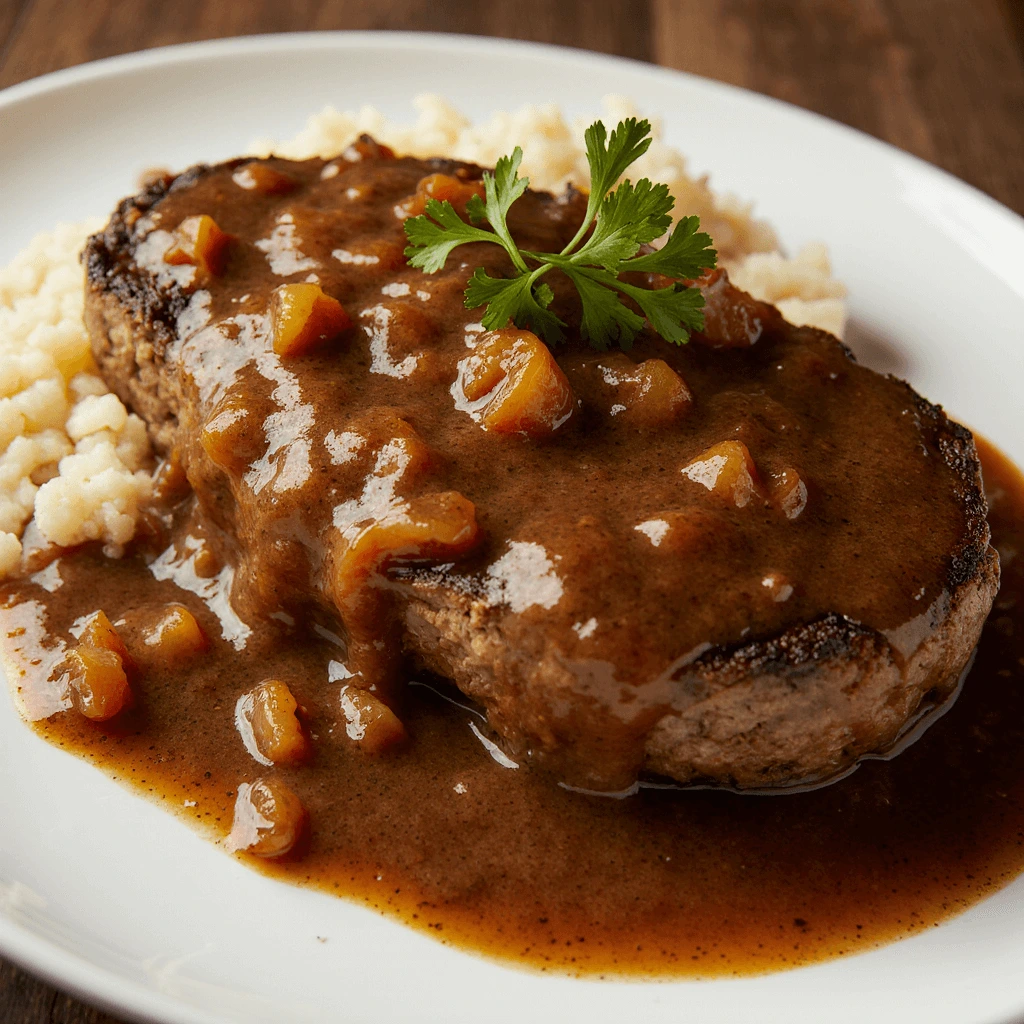
Remember those frozen TV dinners with the mysterious brown patty and thin gravy? Many of us grew up with those pale imitations of real comfort food. That salty, processed taste couldn’t be further from the rich, homemade version you can create in your own kitchen.
This classic American dish transforms simple ground beef into tender, flavorful patties swimming in savory mushroom gravy. The recipe dates back to Dr. James Salisbury, who believed beef was essential for good health. His creation has stood the test of time for good reason.
You don’t need advanced cooking skills to master this dinner favorite. With basic ingredients and proper technique, you’ll achieve restaurant-quality results. The key lies in grating onion into your meat mixture and searing the beef patties before simmering them in gravy.
Your family will love this hearty meal served over creamy mashed potatoes. The entire process takes about 30 minutes from preparation to serving. Let’s explore how to create this beloved comfort food that far surpasses any frozen version.
Key Takeaways
- Salisbury steak gravy transforms humble ground beef into a restaurant-quality comfort food.
- The recipe originated with American physician Dr. James Henry Salisbury.
- Homemade versions vastly outperform frozen TV dinner alternatives.
- Proper technique ensures perfect texture and flavor in both patties and gravy.
- The dish is versatile and adaptable to different dietary needs.
- Total preparation and cooking time is approximately 30 minutes.
- Simple ingredients and basic kitchen skills are all you need
Understanding Salisbury Steak Gravy
Many people confuse this classic dish with actual steak. The truth is more interesting. It features seasoned ground beef, formed into patties, and simmered in a rich sauce.
This preparation differs from regular hamburgers. It includes breadcrumbs, onions, and Worcestershire sauce in the meat mixture. These additions create exceptional flavor and texture.
What Makes a Great Salisbury Steak Gravy
Excellent gravy has a rich, savory taste and perfect consistency. It should coat the back of a spoon without being too thick. The best versions use quality beef broth and proper thickening agents.
Balance is crucial. The sauce should complement the beef patties without overpowering them. Good seasoning enhances the natural meat flavors rather than masking them.
Superior homemade versions always beat store-bought alternatives. You control the ingredients and cooking process. This results in deeper flavor and better texture.
The History Behind This Comfort Food Classic
American physician Dr. James Henry Salisbury developed this dish in the late 1800s. He believed ground beef offered significant health benefits. His creation was originally intended as medicinal food.
The recipe evolved from health food to dinner staple. TV dinners popularized it in mid-20th-century America. Modern preparations have refined the original concept while keeping its essence.
This dish holds cultural significance as American comfort food. It represents warmth, nourishment, and family meals. Its enduring popularity speaks to its delicious simplicity.
Essential Ingredients for Your Gravy
Great meals start with quality components. Your ingredient selection directly impacts the final result. Choosing the right elements ensures rich flavor and perfect texture.
Fresh, well-balanced components create memorable dining experiences. Each item plays a specific role in building layers of taste. Understanding these roles helps you achieve restaurant-quality results at home.
Base Ingredients for Rich Flavor
Foundation items form the heart of your dish. Ground beef provides the protein base and savory depth. Select 80% lean ground beef for optimal moisture and flavor.
Breadcrumbs act as a binder in your meat mixture. They help maintain the patty structure during cooking. Combined with eggs, they create a tender texture.
Fresh aromatics like onion and garlic add essential flavor notes. They provide subtle sweetness and complexity. Always use fresh rather than powdered versions when possible.
| Ground beef | 1 pound | Main protein source |
| Breadcrumbs | 1/3 cup | Binding agent |
| Worcestershire sauce | 1 teaspoon | Umami flavor enhancement |
| Beef broth | 2 cups | Gravy liquid base |
| Flour | 3 tablespoons | Thickening agent |
| Onion powder | 1/2 teaspoon | Aromatic seasoning |
Beef broth forms the liquid foundation for your sauce. Quality broth makes a significant difference in final taste. Better Than Bouillon Roasted Beef Base offers superior flavor depth.
Flour serves as the primary thickening agent. It creates a smooth, velvety texture in your final product. Combined with pan drippings, it builds rich flavor.
Optional Add-Ins for Enhanced Taste
Additional components let you customize your creation. Mushrooms add earthy notes and meaty texture. Sauté them before adding to your sauce.
Heavy cream provides luxurious richness. It creates a creamier consistency and mellows sharp flavors. Add it during the final simmering stage.
Various herbs and spices offer personalization options. Thyme, rosemary, or paprika complements the beef flavors. Adjust quantities based on your preference.
Consider these enhancement options:
- Sliced mushrooms for earthy depth
- Heavy cream for richness
- Additional Worcestershire sauce for tang
- Red wine for complexity
- Fresh herbs for brightness
Dietary adaptations accommodate different needs. Gluten-free breadcrumbs and flour work well. Vegetable broth can replace beef broth for vegetarian versions.
Budget-friendly choices maintain quality without high cost. Store-brand broths and basic spices deliver excellent results. Fresh ingredients always outperform pre-packaged alternatives.
Preparation: Getting Your Ingredients Ready
Proper preparation transforms ordinary meals into extraordinary dining experiences. Your mise en place sets the stage for cooking success. Organized ingredients lead to smoother cooking and better flavors.
Begin by gathering all components before starting. This French technique saves time and reduces stress. Measure everything accurately for consistent results.
Preparing Your Aromatics
Fresh aromatics form the flavor foundation of your dish. Grate one medium onion into a large bowl. The juices will soak into your breadcrumbs for moisture.
Combine breadcrumbs with the grated onion mixture. Let them sit for five minutes to absorb flavors. This creates incredibly tender patties with deep flavor.
Chop additional onions if using them in your gravy. Slice mushrooms now if including them. Proper knife skills ensure even cooking later.
Mixing Your Thickening Agents
Your thickening agents require careful preparation. Measure three tablespoons of all-purpose flour into a small bowl. Have beef broth ready at room temperature.
Create a smooth slurry by combining flour with cold water. This prevents lumps in your final sauce. Whisk until no dry spots remain.
Consider these preparation time estimates:
| Aromatic preparation | 3-4 minutes | Onion, breadcrumbs |
| Meat mixture combining | 2-3 minutes | Lean ground beef, seasonings |
| Patties formation | 2 minutes | Meat mixture |
| Thickening agent prep | 1 minute | Flour, water |
Combine your meat mixture gently in a large bowl. Use 80% lean ground beef for optimal texture. Add egg, Worcestershire sauce, and seasonings.
Mix until just combined without overworking. Overmixing creates tough, dense patties. Form into oval shapes about 3/4 inch thick.
Proper preparation affects your final dish significantly. It ensures even cooking and a perfect texture. Your efforts now pay off with superior results.
How to Make Salisbury Steak Gravy Step-by-Step
Mastering this classic comfort food requires following a precise sequence. Each step builds upon the previous one to create layers of flavor. Your patience and attention to detail will reward you with exceptional results.
Creating the Flavor Base
Begin by heating two tablespoons of oil in your large skillet over medium-high heat. Carefully place your prepared beef patties into the hot pan. Brown them for exactly one minute per side to develop a rich crust.
Remove the partially cooked patties and set them aside. They will finish cooking later in the process. The browned bits left in the pan are pure gold for flavor development.
Add chopped onions to the same skillet. Cook them for 2-3 minutes until they become translucent. Include minced garlic during the last 30 seconds to prevent burning.
“The fond – those browned bits at the bottom of the pan – contains incredible depth of flavor that forms the foundation of your sauce.”
If using mushrooms, add them now and cook for 3-4 minutes. They will release moisture and develop a beautiful golden color. Stir occasionally to ensure even cooking.
Building the Roux
Reduce the heat to medium and add two tablespoons of butter. Let it melt completely and foam slightly. Sprinkle three tablespoons of flour over the butter and aromatics.
Cook the flour-butter mixture for 30 seconds while stirring constantly. The roux should smell nutty and appear pale golden. This short cooking time prevents the raw flour taste.
Watch for these visual cues during roux preparation:
- Butter should bubble but not brown excessively.
- Flour will form a paste with the butter.
- Color changes from white to pale yellow
- Mixture develops a slightly nutty aroma.
Proper roux formation ensures your sauce will thicken smoothly. Avoid walking away during this critical step. Thirty seconds pass quickly, but make a significant difference.
Incorporating Liquids and Seasonings
Gradually add two cups of beef broth while whisking constantly. The liquid should incorporate smoothly without lumps. Scrape the bottom of the pan to dissolve all the flavorful browned bits.
Add one tablespoon of Worcestershire sauce and one teaspoon of mustard. Season with half a teaspoon each of salt and black pepper. Bring the mixture to a gentle simmer.
Return the partially cooked patties to the skillet along with any accumulated juices. Reduce the heat to low and cover the pan. Simmer for 5-7 minutes until the sauce thickens.
| Pattie Browning | 2 minutes total | Golden brown crust | Do not overcrowd pan |
| Aromatic Cooking | 3-4 minutes | Onions translucent | Stir occasionally |
| Roux Development | 30 seconds | Pale golden color | Constant stirring |
| Simmering Phase | 5-7 minutes | Gravy coats spoon | Covered cooking |
Check for doneness by inserting a thermometer into the thickest patty. It should read 160°F. The sauce should coat the back of a spoon without being too thick.
Adjust final seasoning with additional salt and pepper if needed. Remember, the flavors will concentrate slightly as the dish rests. Serve immediately over mashed potatoes or egg noodles.
Cooking Techniques for Perfect Consistency
The difference between good and great lies in proper temperature management. Your approach to heat application determines the final texture of both patties and sauce.
Understanding these methods ensures consistent results every time. They transform basic ingredients into restaurant-quality comfort food.
Simmering for Depth of Flavor
Gentle simmering develops complex taste profiles. It allows flavors to meld together beautifully.
Keep your heat at medium-low during this phase. The liquid should show small bubbles around the edges.
Avoid boiling your sauce vigorously. High heat can break the emulsion and create separation.
The ideal simmer time ranges between 5-7 minutes. This period allows the flour to fully hydrate and thicken.
“Low, slow heat coaxes out subtle flavor compounds that high heat destroys. Patience during simmering rewards you with remarkable depth.”
Adjusting Thickness to Your Preference
Your sauce consistency depends on the starch-to-liquid ratio. The initial roux provides the foundation for thickness.
For thinner results, add more broth gradually. Incorporate liquid one tablespoon at a time.
For a thicker consistency, create a cornstarch slurry. Mix one tablespoon of cornstarch with two tablespoons of cold water.
Whisk the slurry into your simmering liquid. Cook for one additional minute until clear and thickened.
Recognize these visual cues for perfect consistency:
- Sauce coats the back of a spoon without dripping.
- Lines remain visible when you draw a finger through the coated spoon.
- The mixture mounds slightly when dropped from a spoon.
- It appears glossy and smooth without separation.
| Too thin | Cornstarch slurry | 1 tbsp cornstarch + 2 tbsp water | Whisk into simmering liquid |
| Too thick | Additional broth | 2-3 tbsp at a time | Whisk gradually until desired consistency |
| Lumpy texture | Strain through sieve | N/A | Press through fine mesh strainer |
| Too salty | Add water or potato | 1/4 cup water or 1 sliced raw potato | Simmer 5 minutes, remove potato |
Temperature control remains crucial throughout cooking. Your skillet should maintain even heat distribution.
When searing patties, use high heat for a short time. This creates a flavorful crust while keeping interiors juicy.
Reduce the heat immediately after adding liquids. This prevents scorching and ensures smooth thickening.
Finish cooking your patties in the simmering sauce. This technique allows them to absorb flavor while staying moist.
The total cooking time typically takes 15-20 minutes after preparation. Proper technique ensures tender results every time.
Serving Suggestions and Pairings
The perfect presentation elevates this classic comfort food from a simple dinner to a memorable dining experience. Your choice of accompaniments can transform the dish for different occasions.
Traditional Salisbury Steak Presentation
Classic serving features creamy mashed potatoes as the foundation. The rich gravy blankets both the beef patties and potatoes beautifully.
Arrange two patties per dinner plate over a generous portion of potatoes. Ladle the warm sauce over everything, allowing it to cascade down the sides.
Garnish with fresh parsley for color contrast. The green accents make the dish visually appealing.
“The combination of savory beef and smooth potatoes creates harmony on the plate. Each element complements the others perfectly.”
Traditional vegetable sides balance the richness. Consider these classic options:
- Steamed green beans with almond slices
- Buttered corn with a pinch of black pepper
- Glazed carrots with fresh dill
- Simple garden salad with vinaigrette
Alternative Serving Options
Many delicious variations exist beyond the traditional preparation. Egg noodles provide excellent texture for soaking up the flavorful sauce.
Rice offers a neutral base that lets the gravy shine. Crusty bread serves as the perfect tool for cleaning your plate.
Consider these creative leftover transformations:
| Beef patty sandwich | Slice patties, heat with gravy | On toasted bread with lettuce |
| Shepherd’s pie | Chop patties, mix with vegetables | Top with mashed potatoes, bake |
| Pasta sauce | Shred meat, combine with gravy | Toss with egg noodles |
Portion guidance varies by appetite. This recipe typically serves four to six people comfortably.
For larger groups, increase the ingredients proportionally. Remember, cooking time may need adjustment.
Beverage pairings enhance the dining experience. Robust red wines complement the savory flavors.
Dark beers work wonderfully with the rich sauce. Iced tea or lemonade offer refreshing non-alcoholic options.
Adapt serving styles for special occasions. Use your best dishes and add elegant garnishes.
For casual family dinners, serve directly from the skillet. This creates a warm, communal feeling.
Cultural adaptations keep the dish interesting. Add spices that reflect different culinary traditions.
Dietary needs can be accommodated easily. Gluten-free options work well with proper ingredient swaps.
Variations and Customizations
This classic comfort food offers incredible flexibility. You can transform the basic recipe to suit different tastes and dietary needs.
Simple ingredient swaps create entirely new experiences. The essence of the dish remains while flavors evolve.
Mushroom Gravy Variation
Adding mushrooms creates earthy depth in your sauce. Use cremini or button varieties for best results.
Slice them thinly for even cooking. Sauté with onions until golden brown.
The mushrooms release moisture that enhances the broth. They add meaty texture to the final dish.
Consider these preparation tips:
- Use 8 ounces of fresh sliced mushrooms.
- Cook until the liquid evaporates and they brown.
- Add thyme or rosemary for herbal notes.
- Combine with beef broth for a rich flavor.
Onion Gravy Alternative
Caramelized onions create a sweet, deep flavor. Slice two large onions thinly for this version.
Cook them slowly over medium-low heat. Stir frequently until golden brown.
This process takes about 20 minutes. The natural sugars caramelize beautifully.
Use these onions as your aromatic base. They will melt into the sauce during simmering.
“Caramelization transforms simple onions into complex sweetness. This technique elevates ordinary gravy into something extraordinary.”
Dietary Adaptations
Many dietary needs can be accommodated easily. The recipe maintains its character through simple swaps.
For gluten-free needs, use almond flour instead of breadcrumbs. Replace regular flour with cornstarch for thickening.
Choose these protein alternatives:
- Ground turkey for lower fat content
- Chicken for a lighter flavor profile
- Plant-based crumbles for vegetarian versions
- Lentil-walnut mixture for a vegan option
Adjust consistency to your preference. Some enjoy a thinner, soup-like sauce.
Simply add more broth during the final simmer. The patties will still absorb wonderful flavor.
International variations introduce global tastes. Add smoked paprika for Spanish flair.
Include coconut milk for Thai influence. The possibilities are nearly endless.
This dish freezes beautifully for future meals. Cool completely before storing in airtight containers.
Reheat gently on the stove with added broth. The texture and taste remain excellent.
Conclusion
Creating this classic comfort food dish rewards you with rich, satisfying results. Your homemade version far surpasses any store-bought alternative. It brings warmth and nourishment to family dinners.
Remember the key techniques for perfect results. Avoid overmixing your ground beef mixture. Achieve a good sear on your patties in the skillet.
This recipe offers wonderful versatility. You can adapt it to various tastes and dietary needs. Simple ingredient swaps create new flavor experiences.
Share your delicious creation with loved ones. Enjoy the pride of serving a from-scratch meal. This timeless dish continues to delight generations.
FAQ
What ingredients are essential for a rich gravy?
You need beef broth, flour, and drippings from cooked patties. These form the foundation. Worcestershire sauce and a bit of butter add depth and a glossy finish.
Can I prepare this dish ahead of time?
Absolutely. You can form the patties and refrigerate them for up to a day. The gravy also reheats beautifully, often tasting even better the next day.
What’s the best way to thicken the sauce?
A simple flour and butter roux is the classic method. Whisk it into your hot drippings before slowly adding broth. Let it simmer until it reaches your desired consistency.
Are there any good side dishes to serve with it?
Creamy mashed potatoes are the traditional favorite. Buttered egg noodles, steamed green beans, or sweet corn also pair wonderfully with the savory gravy.
Can I use a different type of ground meat?
A> Yes, ground turkey or a lean ground beef blend works well. Just be aware that leaner meats produce less fat, so you may need to supplement with a little butter or oil for the roux.
How do I prevent the patties from becoming tough?
Avoid overmixing the meat. Gently combine your ingredients until just incorporated. Handle the patties as little as possible when forming them for a more tender result.