
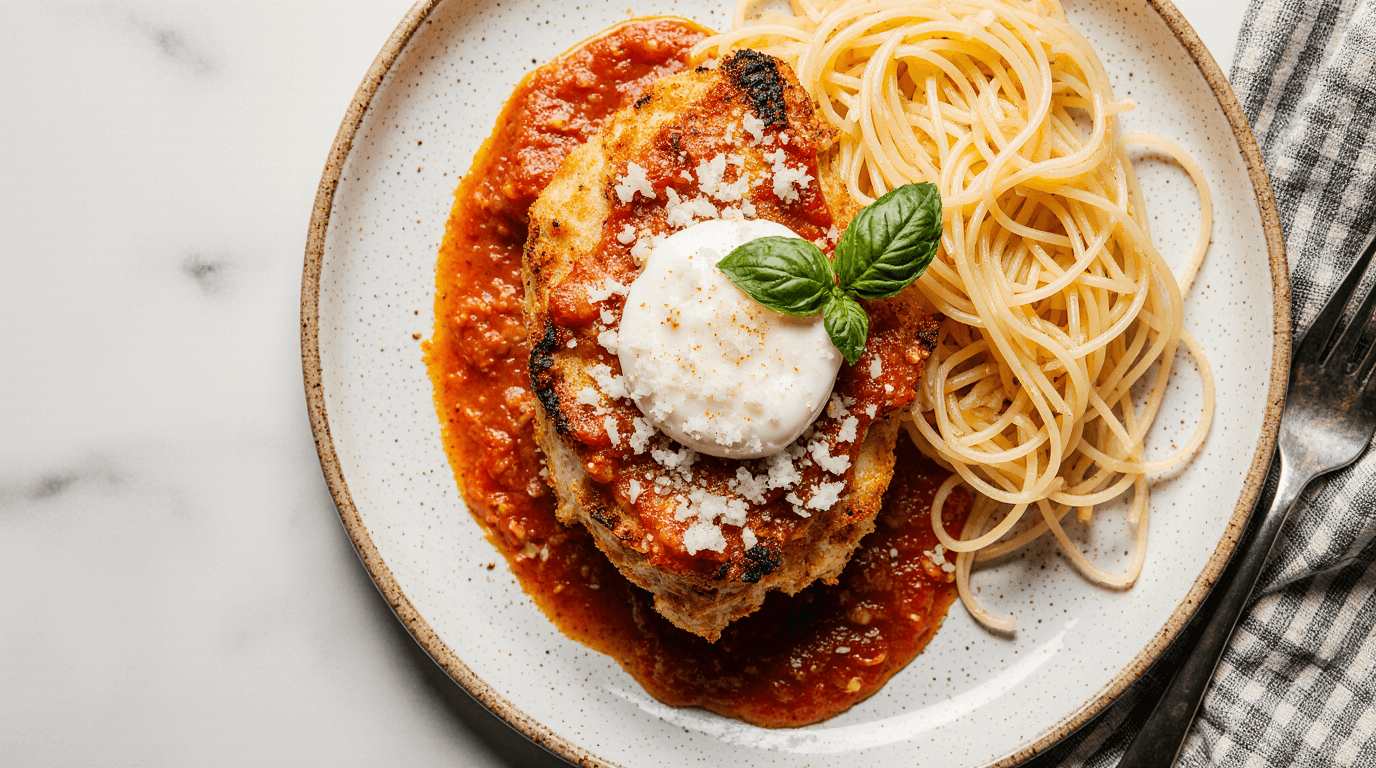
You deserve a weeknight win that tastes like a hug. This classic chicken parmesan recipe brings a crisp crust, bright tomato sauce, and gooey cheese to your table fast. It’s the kind of dish that turns a rushed night into something special.
In about 30 minutes, you’ll prep cutlets, bread them quickly, pan-fry to lock a golden edge, then finish in the oven so the topping melts just right. The goal is crispy, not soggy: edges stay crunchy, sauce sits on top, and the cheese melts without watering down the crust.
This version fits your kitchen because it uses common pantry staples and simple swaps when you’re short on time. Many home cooks call it a keeper — moist inside, great flavor, and loved by family and friends. You’ll get juicy meat, a golden exterior, and a balanced sauce-to-cheese ratio every time.
Table of Contents
Why This Chicken Parm Stays Crispy (Not Soggy)
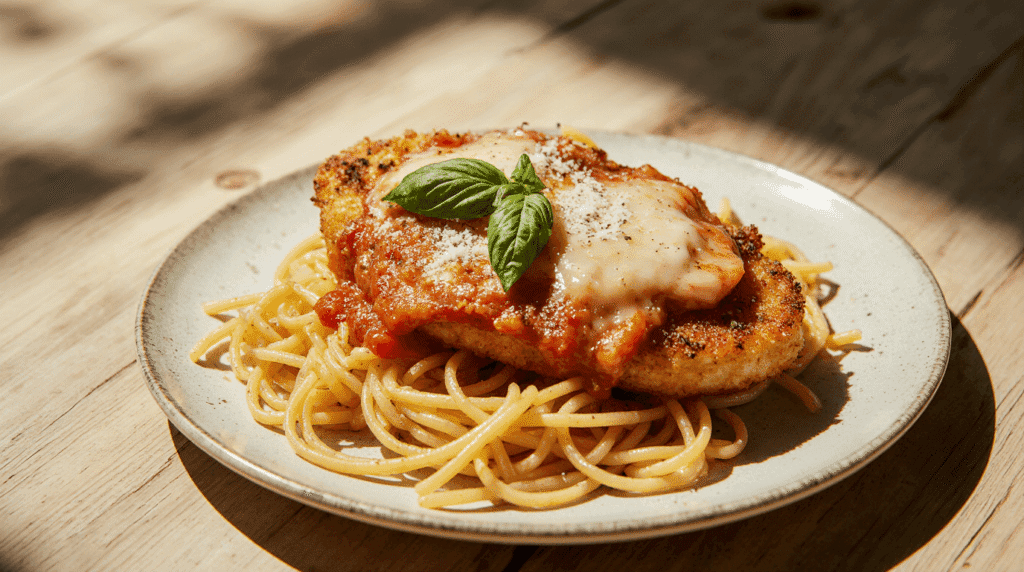
A crisp crust comes from two focused heat steps: a hot pan to seal the breading, then a short, high-heat finish in the oven. This method drives off surface moisture and lets the center reach temperature without steaming the exterior.
Watch for the pan cues: you want an audible sizzle and a golden brown shell after about 3–4 minutes per side. That sound shows the coating set, not steamed, and it builds crunch before baking.
For extra crispiness, bake on a wire rack set over a sheet pan so air flows under the cutlets. Alternatively, use only a thin layer of sauce under each piece to add flavor without soaking the bottom.
Control mozzarella moisture by blotting slices dry and adding most of the cheese to the top center. Leave the edges exposed so the perimeter stays crunchy and looks restaurant-style when it comes out of the oven.
- Two-step logic: sear to set the crust, then finish with steady baking heat.
- Pan signs: sizzling sound and golden brown color mean you’re on track.
- Anti-soggy setup: Use a wire rack or minimal sauce under the cutlets.
- Cheese timing: blot fresh mozzarella and place it mainly on the top center to protect crisp edges.
Ingredients You Need for a Classic Chicken Parmesan
Pick quality staples—boneless chicken breasts or pre-cut tenders will shape both cook time and texture.
Essential ingredients and their roles:
- Chicken breasts or chicken cutlets — breasts cook evenly; cutlets finish faster and stay tender.
- All-purpose flour — dries the surface so eggs cling for a stable coating.
- Eggs — bind crumbs to the meat for a crisp shell.
- Panko or Italian breadcrumbs mixed with grated parmesan — panko gives extra crunch; Italian crumbs add flavor and browning.
- Mozzarella cheese (shredded or blotted fresh) — melts for stretch; use fresh for milder moisture control.
- Tomato sauce or marinara — marinara is ideal fresh; a good store-bought jar works if you add herbs and a splash of olive oil.
“Standard dredge: flour → eggs → breadcrumbs mixed with parmesan or pecorino — that order guarantees adhesion and a crisp finish.”
Kitchen Tools That Make It Easier
A compact toolset helps you move quickly from prep to oven without sacrificing crisp texture. A few small items will keep your counters tidy and speed up every step.
Meat mallet and plastic wrap for even thickness
Use a meat mallet (or a rolling pin) inside plastic wrap to pound the breast to about 1/3-inch. That even thickness prevents dry edges and undercooked centers.
Shallow bowls and a landing plate for a clean station
Set three shallow bowls for flour, beaten eggs, and the breadcrumb mix. Keep a landing plate to the side so you move in one direction and avoid a mess.
Skillet, baking sheet, or casserole dish, and instant-read thermometer
Pan-fry in a hot skillet to set the crust, then finish on a sheet pan with a rack for the best crisp during baking or in a casserole dish if you want saucier results.
Confirm doneness with an instant-read thermometer — pull when the internal temp hits 165°F. Quick cleanup tips: line the sheet pan, use tongs, and stage the bowls close together for an efficient workflow. This is the easiest way to stay fast and clean on a busy weeknight.
Prep Your Chicken for Fast, Even Cooking
Turning two breasts into thin, uniform pieces is the fastest way to get dinner on the table. Start by slicing each chicken breast lengthwise to create four cutlets. Thinner pieces cook in minutes and give you a predictable finish every time.
How to slice into thin cutlets
Place a breast on a cutting board and hold it steady. Slice horizontally through the center to make two thinner pieces from each breast.
Pound to about 1/3-inch thickness
Cover each cutlet with plastic wrap and use a meat mallet or rolling pin to pound to roughly 1/3-inch. This evens the thickness, tenderizes the meat, and shortens cook time so the breading doesn’t burn while the inside finishes.
Seasoning basics
Season both sides with salt and pepper for a solid baseline of flavor. If you like, add a pinch of Italian seasoning or Montreal chicken spice without changing the method.
- Consistency: even cutlets give predictable minutes on the pan and safer doneness.
- Breading-ready: flat surfaces hold flour and crumbs evenly for better adhesion.
- Food safety: work quickly and refrigerate if not using immediately.
Breading Station Setup for Perfect Adhesion
Set up a tidy station with three shallow bowls, so you move quickly and avoid sticky messes. This simple layout keeps the coating even and helps the crust stick during frying.
Flour bowl: season and prep
In the first bowl, combine flour with a pinch of salt and pepper. Seasoning the flour adds base flavor and creates a dry layer that helps the egg cling.
Egg bowl: whisk until frothy
Crack your eggs into the second bowl and whisk until the mixture looks bubbly and light. Frothy eggs coat more evenly and prevent the crumbs from sliding off.
Breadcrumb bowl: mix crumbs and cheese
In the third bowl, combine panko or Italian crumbs with grated Parmesan and a little salt. The cheese boosts flavor and promotes even browning.
Dry-hand/wet-hand method and resting
Use one hand to handle dry breading (flour and crumbs) and the other for wet work (eggs). This keeps the bowls clean and stops gummy clumps from forming.
After you finish breading, let each piece rest for 5–15 minutes so the crust sets. A brief rest helps the coating adhere and reduces loss in the pan.
- Flow: chicken → flour → eggs → crumbs → landing plate.
- Tip: Keep the bowls close to minimize movement and speed up the process.
chicken parmesan recipe: Step-by-Step Method (30-Minute Game Plan)
Follow this focused 30-minute plan to sear breaded cutlets, assemble with sauce and cheese, and finish hot in the oven. Time each stage and use the oven minutes to tidy up or prepare sides.
Shallow fry in olive oil without overcrowding the pan
Heat a thin layer of olive oil in a wide skillet until shimmering. Fry in batches so the pan keeps its temperature.
Do not overcrowd — crowding drops the heat, turns frying into steaming, and softens the crust.
Timing target: about 3-4 minutes per side to set the crust
Sear each piece about 3–4 minutes per side until golden. The cutlets do not need to be fully cooked through; you’re locking a crisp shell.
Assemble with sauce and mozzarella, then bake until bubbly.
Spread a thin layer of marinara or tomato sauce in a baking dish. Place cutlets in a single layer, spoon sauce mainly over the center, and top with mozzarella.
Temperature and doneness: bake at 425°F and cook to 165°F internal
Bake at 425°F for about 12–15 minutes until bubbling. Confirm doneness with an instant-read thermometer — pull at 165°F to keep the meat juicy and safe.
Oven Finishing: Bake vs. Broil for the Best Melt
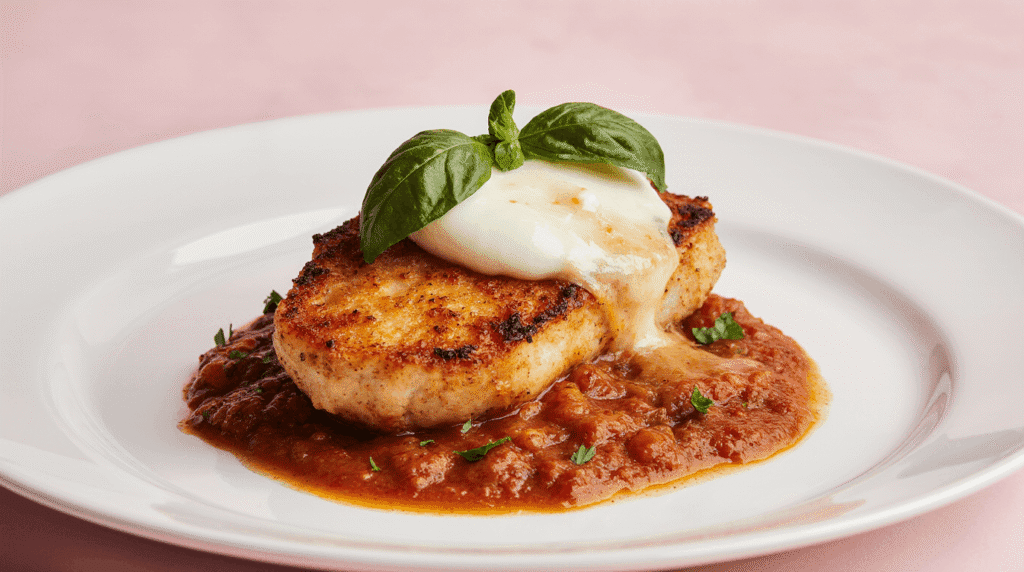
The final heat step makes the dish look and taste like a restaurant plate. You can bake to heat through and melt cheese gently, or broil for quick browning on top. Choose based on your oven and how much surface color you want.
When to add mozzarella so it melts without sogging the breading
Add mozzarella after the cutlets are hot and the sauce is bubbling. If you add cheese too early, trapped steam can soften the crust. For fresh mozzarella, blot slices dry first to remove excess moisture. For shredded mozzarella cheese, scatter evenly so it melts faster and releases less water.
How to brown the cheese briefly without burning
To brown, move the rack one notch below the broiler for medium-high heat. Broil for 1–2 minutes, watching continuously. Keep the oven door slightly open if your model allows; this reduces radiant intensity and helps prevent charred spots.
Leave the edges exposed so the perimeter stays crisp. Spoon the sauce mainly under the center and keep the crust edge visible on the top. That simple approach keeps texture intact and presentation sharp.
| Bake (425°F) | Even heating, gentle melt | 10–15 minutes | Cheese melted, crust retained |
| Broil (high) | Quick browning, golden top | 1–3 minutes | Spotted brown top; watch to avoid burning |
| Bake then Broil | Best of both: heat through then color | 12 minutes bake + 1–2 minutes broil | Juicy interior with browned cheese |
- Checkpoint: sauce bubbling, cheese fully melted, and internal temp 165°F — then pull.
- If using fresh mozzarella, blot first; if shredded, use sparingly for faster melt.
- Use broil only as a finishing touch and watch closely for the best top in minutes.
Pro Tips for Extra Flavor and Restaurant-Style Results
A few chef tricks give the crust a deeper aroma and keep the edges crisp at serving. These are small changes that add big flavor without slowing you down.
Boost the crust: stir minced garlic, chopped parsley, and grated pecorino or parmesan into the breadcrumb mix. The extra salt and umami from hard cheese improve browning. Keep the salt modest so the coating doesn’t taste too salty.
Pick the right oil: Use extra virgin olive oil if you want a pronounced olive flavor. For frying at higher heat, choose a neutral, high smoke-point oil like canola, avocado, or grapeseed. That way, you get crisp edges without burned notes.
Use just enough sauce: spoon sauce mainly under the center of each piece. This gives tomato flavor without soaking the crust. Think of sauce as a flavor accent, not a blanket.
Finish with fresh herbs: tear fresh basil or sprinkle parsley right before serving. The herbs add color, aroma, and bright flavor that cut through the cheese and oil.
Restaurant-style plating tip: spread a thin pool of sauce on the plate, place the cutlet on top to preserve crunch, and pass extra grated cheese at the table for a final flourish.
| Tip | Why it helps | Quick action |
| Garlic + parsley + cheese | More aroma, better browning | Mix into crumbs before dredging |
| Extra virgin olive oil | Rich olive flavor | Shallow fry at moderate heat |
| Neutral high smoke-point oil | Crisp crust at high heat | Use for faster searing (canola/avocado) |
| Minimal sauce placement | Protects crunch, adds tomato flavor | Spoon under center only |
| Fresh herb finish | Brightens aroma and color | Tear basil or chop parsley at the end |
Serving Ideas and Sides That Work Every Time
Round out this classic plate with quick, well-chosen sides that you can prep while the main bakes. These pairings keep the flavors balanced and let your guests customize their portions with extra sauce or cheese.
Classic: pasta and extra marinara
Plate the chicken parmesan over spaghetti or linguine and pass warm marinara on the side.
Why it works: the pasta soaks up sauce and stretches the meal for a crowd.
Light, fresh sides to balance richness
Choose a crisp Caesar salad to cut the oil and cheese. Roast asparagus or roasted cauliflower for a warm, vegetal contrast.
Both sides take little time and can cook while the dish finishes in the oven.
Lunch option: a warm sandwich
Turn leftovers into a chicken parm sandwich on a toasted roll or bun. Toast the bread first so the sauce won’t make it soggy.
Garnish with torn basil or chopped parsley and offer extra grated cheese at the table.
| Over pasta | Extra marinara on the side | 5–7 minutes |
| Light sides | Caesar salad, roasted asparagus, roasted cauliflower | 10–15 minutes |
| Sandwich | Toasted roll, basil, grated cheese | 3–5 minutes |
Make-Ahead, Meal Prep, and Storing Leftovers
Save evening time by doing the heavy lifting ahead. Cooked and assembled pieces hold up well if you follow a short timeline and use tight wrapping.
Prep ahead (up to 24 hours)
Sear breaded cutlets until they reach 165°F, then assemble with marinara and a bit of cheese. Cover tightly and refrigerate. When ready, bake in the oven for about 5 extra minutes so everything finishes hot.
Fridge storage for quick weeknights
Keep leftovers covered and refrigerated for 3– 4 days. Use shallow airtight containers or wrap single portions to limit moisture on the crust. A measured cup of sauce on the side preserves texture best.
Freezer-friendly meal prep
Wrap single portions in freezer-safe containers and label with date and contents. Freeze up to 2 months. Thaw overnight in the fridge before reheating so the sauce and cheese reheat evenly.
| Refrigerator | Airtight container | 3–4 days |
| Make-ahead | Assembled, covered | Up to 24 hours |
| Freezer | Wrapped, labeled | Up to 2 months |
Reheating Without Losing the Crunch
Reheat with dry, circulating heat so the crust can dry and crisp again without overcooking the center. The microwave steams the breading and makes it soft because trapped moisture has nowhere to escape. The best way to bring crispness back is a short bake in a hot oven that lets steam vent and edges re-crisp.
Oven reheat method for a crisp crust
Preheat to 350°F and place pieces on a sheet or on a rack set over a pan. Bake uncovered for about 10–15 minutes as a baseline, or nudge to 375°F for extra crisping if you have a little more time. Watch for bubbling cheese and a dry, golden edge as your visual cue.
How to reheat from frozen after thawing overnight
Thaw fully in the refrigerator overnight, then bake uncovered so moisture can escape. Use the same 350°F for 10–15 minutes guideline and check that the interior reaches steaming hot throughout.
- Place cuts on a rack if possible so hot air circulates and the bottom won’t steam.
- Skip adding extra sauce or oil during reheating; add sauce after if needed to preserve crunch.
- Reheat until hot throughout — thicker pieces or stacked leftovers need extra time for safe serving.
Conclusion
Bring it all together with a simple, repeatable plan. Pound cutlets to about 1/3-inch, use the flour → egg → breadcrumb and grated parmesan order, and let the breading rest briefly so it sticks.
Sear in a hot pan about 3–4 minutes per side, then bake at 425°F until the interior reaches 165°F. Control sauce placement, blot fresh mozzarella, and leave the edges exposed for crisp texture.
Remember: don’t overcrowd, don’t drown the cutlets in sauce, and use panko, seasoned flour, and freshly grated cheese for the best crunch. Finish with torn basil and serve with confident timing.
Try the chicken parmesan recipe once exactly as written, then tweak the sauce, herbs, and cheese to make the dish your own.
FAQ
How do you keep the breading crisp when finishing in the oven?
Pan-fry the cutlets first to set a golden crust, then transfer to a wire rack on a baking sheet so air circulates. Add only a thin swipe of sauce under each piece and place cheese on top just before baking to prevent sogginess.
Can you use whole breasts instead of cutlets to save time?
You can, but slice or pound breasts to about 1/3-inch thickness so they cook evenly in the same 3–4 minutes per side. Thinner pieces reach 165°F faster and keep the crust from burning while the interior finishes.
What breading mix gives the best texture and flavor?
Use seasoned all-purpose flour, beaten eggs, and a breadcrumb mix—panko for extra crunch or Italian-style crumbs for built-in seasoning. Stir grated Parm or pecorino into the crumbs for savory depth without extra steps.
Which cheese should you use for the ideal melt and flavor?
Freshly grated hard cheese for topping and sliced or shredded low-moisture mozzarella for meltability work best. Blot fresh mozzarella if it’s watery to keep edges crisp while the center gets gooey.
Is marinara or tomato sauce better for this dish?
Use a slightly thick marinara or a strained tomato sauce to avoid excess moisture. Homemade or a good-quality jarred option is fine—just warm it before assembling to keep bake time short.
What oil is best for shallow-frying the cutlets?
Use olive oil for flavor, but choose a higher smoke-point oil—like light olive oil or canola—if you’re frying at higher heat. Aim for a shallow pool that reaches halfway up the cutlet for even browning.
How do you set up an efficient breading station?
Use three shallow bowls: seasoned flour, frothy beaten eggs, and seasoned breadcrumbs mixed with cheese. Use a dry-hand/wet-hand approach and let the breaded pieces rest briefly so the coating adheres before frying.
What internal temperature signals doneness without overcooking?
Pull the meat at 165°F measured with an instant-read thermometer. That ensures safety and juiciness; thinner cutlets hit this quickly, so finish in the oven only to melt cheese and warm sauce.
Should you bake or broil to brown the cheese?
Bake at 425°F until heated through, then broil briefly—watching closely—to brown and bubble the cheese. Add the mozzarella toward the end to limit moisture contact with the crust.
Can you prep components ahead of time for faster weeknight dinners?
Yes. Bread the cutlets and refrigerate up to 24 hours, or freeze uncooked on a tray then bag. Store sauce separately and assemble just before the oven to maintain a crisp finish.
What’s the best way to reheat leftovers without losing crunch?
Reheat in a preheated oven at 350°F on a wire rack inside a baking sheet. This restores crispness better than the microwave. From frozen, thaw overnight in the fridge before reheating for best results.
How can you boost the crust’s flavor for a restaurant-style result?
Mix minced garlic, chopped parsley, and grated cheese into the breadcrumbs, and season the flour well. Finish with torn fresh basil right before serving to add brightness and an herby aroma.