
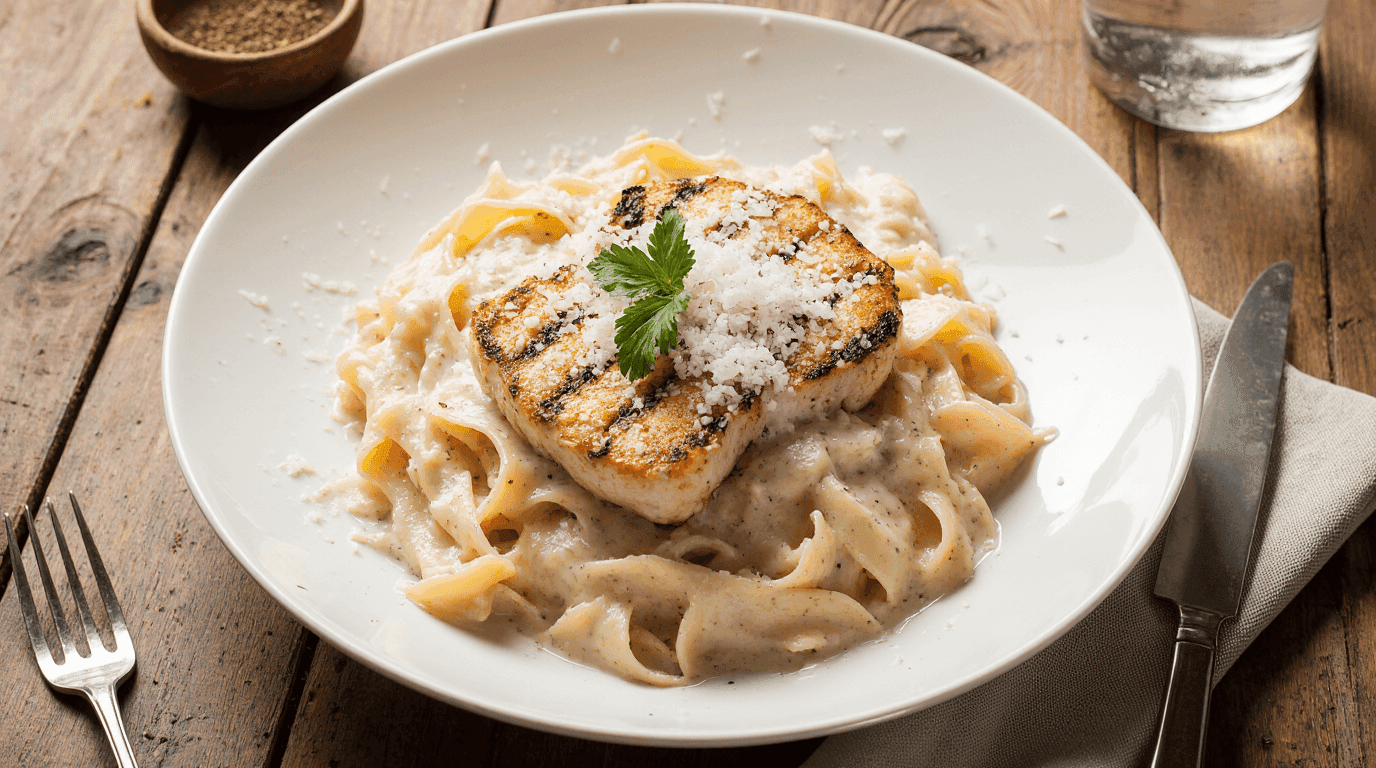
You deserve a meal that feels both simple and special. This version delivers a creamy, garlicky pasta dinner that comes together in about 30 minutes and shines for weeknights or when guests arrive.
Expect juicy, well-seasoned chicken, a smooth sauce built with gentle heat, and glossy pasta finished with reserved cooking water for perfect texture.
You’ll learn an approachable method that repeats easily and produces restaurant-style flavor without stress. The steps are clear, so you can cook confidently and focus on the moment, not the clock.
Why this works: simple techniques, timing that fits your schedule, and a few small touches that turn an everyday meal into something memorable.
Key Takeaways
- This chicken alfredo recipe is quick—about 30 minutes from start to finish.
- You’ll master juicy chicken and a smooth, garlicky sauce.
- Gentle heat and reserved pasta water create the right sauce texture.
- It’s repeatable for busy weeknights yet elegant enough for guests.
- Small techniques yield consistent, restaurant-style results every time.
Chicken Alfredo at a Glance: Creamy, Garlicky, and Ready in About 30 Minutes
This dish gives big comfort with very little fuss — ready fast and impressive on the plate. It’s built to deliver rich flavor without long prep, so you can get dinner on the table in about 30 minutes.
Why it’s high-reward and low-effort: Sear the protein quickly, then build the sauce in the same pan for extra flavor and fewer dishes. Pasta boils while you prep, the sauce finishes while the protein rests, and the total minutes stay low.
What “Alfredo” means today
In American kitchens, alfredo usually means butter and freshly grated Parmesan plus cream for a silkier texture. That creamy upgrade helps the sauce cling to fettuccine, the classic noodle that catches every glossy strand.
What success looks like
- Tender, well-rested protein sliced to serve.
- A glossy sauce that doesn’t separate and coats noodles instead of pooling.
- A dependable crowd-pleaser for weeknights, family dinners, or guests when you want maximum comfort in minimal time.
Ingredients You’ll Need for Chicken Alfredo
With a small, focused set of ingredients, you can build a rich, balanced pasta meal fast. Below are grouped items to help you shop quickly and cook confidently.
Pasta picks
Fettuccine is traditional because wide strands hold the creamy sauce. Linguine, penne, or bowties work well if you prefer a different shape.
Protein
Use boneless, skinless chicken breasts for classic results. Thighs are a fine swap. Thin cutlets cook faster and stay juicier.
Dairy & fat
Butter and heavy cream give the richest texture. For a lighter finish, use whole milk. Add a bit of cream cheese if you want extra body and stability.
Cheese
Freshly grated Parmigiano Reggiano melts smoothly and tastes brighter than pre-grated options. Use real Parmesan for the best melt and flavor.
Flavor builders & finishing touches
- Garlic (minced) and shallot for aroma
- Italian seasoning, paprika, salt, and pepper to season
- Olive oil for searing and parsley or red pepper flakes to garnish
Note: Reserve one cup of pasta water to adjust the sauce’s consistency without thinning the flavor.
Kitchen Tools That Make This Recipe Foolproof
Right tools cut stress and boost results—start with the right pot, pan, and thermometer.
Large pot and why salted water matters
Use a large pot so the pasta has room to move. That helps noodles cook evenly and prevents sticking when you stir.
Salt the water generously: it seasons the pasta from the inside and lifts the whole dish’s flavor.
Wide skillet for searing and building sauce
A wide skillet or rondeau lets you sear chicken and build the sauce in one pan. Browning adds depth, and the pan captures browned bits for flavor.
Heavy-bottom pans give steadier heat and reduce the risk of scorching or a split sauce.
Thermometer and supporting tools
An instant-read thermometer takes the guesswork out of doneness—pull the meat at 165°F for safe, juicy results. Use tongs, a whisk, and a microplane to toss pasta and melt cheese smoothly.
“Good gear doesn’t make you a cook, but it makes good cooking easier.”
| Large pot | Boil pasta with room to move | Salt the water well; reserve 1 cup before draining |
| Wide skillet / rondeau | Sear protein and finish sauce | Use medium-low heat to protect dairy |
| Instant-read thermometer | Confirm internal temperature | Check center for 165°F to make chicken perfectly cooked |
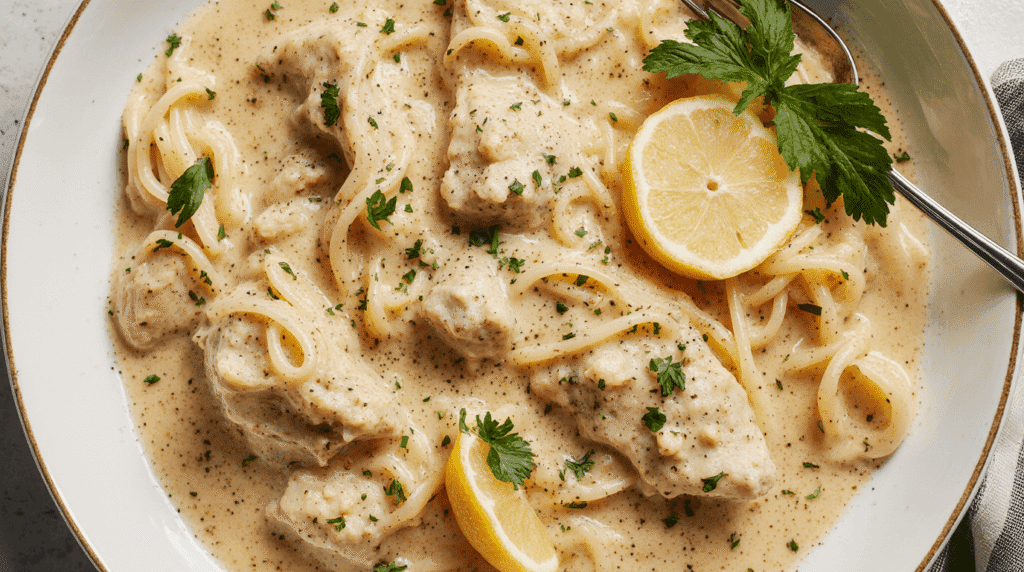
How to Prep Chicken Breasts for Juicy, Tender Results
A quick prep routine—pounding or slicing—sets you up for even cooking and great texture. Choose the faster path based on what you bought: pound whole breasts to an even thickness, or slice into thin cutlets for quicker searing.
Pound vs. slice
Pounding evens the thickness so the meat cooks at one rate. That reduces dry edges and underdone centers.
Slicing into cutlets saves time and gives more surface area to brown. Both methods reach doneness more predictably.
Season simply and well
Pat the meat dry, then season both sides with salt, pepper, Italian seasoning, and a pinch of paprika. Seasoning every surface ensures the meat tastes like part of the dish, not an afterthought.
Sear, watch the time, then rest.
Heat a skillet with a thin film of oil until shimmering, then add the breast or cutlets so they brown instead of steaming. Browning builds flavor and texture.
Cook time varies with thickness, but look for an internal temperature of 165°F as your reliable cue. Rest under foil for about 5 minutes to let juices redistribute.
Slice against the grain before serving; this small step makes each bite noticeably more tender.
How to Cook Pasta for Alfredo Sauce That Clings
Start by bringing a big pot of well-salted water to a rolling boil. Salt seasons the pasta from the inside, so your final sauce tastes brighter when the noodles are mixed in.
Cook to al dente
Follow package timing, but stop about one minute early. The pasta will finish cooking in the hot sauce, so avoid overcooking. Check texture at the recommended minutes to hit firm-but-tender.
Reserve pasta water: liquid gold
Before you drain, scoop out about one cup of starchy water. That liquid helps emulsify the sauce and make it silky. Keep more (up to 1–1½ cups) if you plan a looser finish.
Drain, don’t rinse
Drain the noodles and never rinse them. Rinsing removes the starch that helps the sauce cling and shine.
Troubleshooting: if the pasta sits too long, toss it with a small splash of reserved water to loosen before combining with the sauce.
Homemade Alfredo Sauce: Creamy, Cheesy, and Smooth
A silky sauce starts with quick, fragrant garlic and careful heat control. Start by sautéing minced garlic about 30 seconds—just until it smells bright. Avoid browning to prevent bitterness.
Garlic-first base
Gently sweat the garlic in butter or oil over medium-low heat. That brief step builds the base without scorching.
Two simple sauce paths
- Heavy cream + Parmesan: add heavy cream and bring to a gentle simmer. Stir in freshly grated parmesan; it thickens in about 3–4 minutes.
- Roux + milk: make a butter-flour roux, whisk in warm milk, and cook until smooth. Do not boil; keep the heat low for stability.
Optional cream cheese boost
Stir in a small piece of cream cheese for extra body. It may look clumpy at first, but it smooths as you whisk in warm cream.
Prevent clumps & fix texture.
- Add grated cheese gradually off high heat to avoid grainy cheese clumps.
- If too thick, loosen with a splash of reserved pasta water (about one cup).
- If too thin, simmer briefly or add an extra handful of fresh parmesan.
Step-by-Step Chicken Alfredo Recipe: From Pan to Plate
Start by syncing the pasta and protein so both finish hot and perfectly timed. Put a large pot of well-salted water on to boil, then prep and season the meat while it heats.
Cook the pasta while you prep the chicken.
Drop fettuccine into boiling water and cook to al dente, about one minute less than package time. Before draining, reserve one cup of starchy water.
Sear the chicken in olive oil until browned and cooked through
Heat olive oil in a large skillet over medium-high heat. Sear the seasoned pieces until golden, about 3–7 minutes per side depending on thickness. Aim for 165°F internal temperature, not just color.
Transfer to a plate and rest five minutes under foil before slicing thin against the grain.
Build the alfredo sauce in the same skillet.
Lower heat to medium-low and add minced garlic; sauté 30 seconds until fragrant. Scrape browned bits into the sauce for extra depth.
Reduce the heat before stirring in butter and cream, then whisk in freshly grated Parmesan over high heat so the sauce stays glossy and smooth.
Toss noodles in sauce, then adjust with reserved pasta water.
Add drained noodles to the skillet and toss to coat. If the sauce is too thick, add reserved water a few tablespoons at a time until the pasta is silky and clinging, not soggy.
Slice chicken and serve over fettuccine with parsley and cracked pepper.
Arrange sliced, rested meat over the dressed pasta. Finish with chopped parsley and freshly cracked pepper. Taste and adjust salt and pepper just before serving.
| 1 | Boil pasta | 10–12 minutes | Reserve 1 cup pasta water |
| 2 | Sear protein in skillet with olive oil | 3–7 minutes per side | Target 165°F internal temp |
| 3 | Build sauce in same pan | 4–6 minutes | Lower heat before adding dairy |
| 4 | Toss noodles and finish | 1–2 minutes | Adjust with reserved water for silkiness |
Recipe Tips for Restaurant-Quality Chicken Alfredo
A few precise moves—timing, temperature, and fresh cheese—turn the dish into something that impresses every time. Follow these targeted tips to keep meat juicy and the sauce glossy without extra fuss.
Don’t overcook the protein
Thin cutlets reduce total sear minutes and make even cooking easier. Pull the meat once an instant-read thermometer registers 165°F for safe, juicy results.
Also watch visual cues: a golden crust, juices that run clear, and no pink center are signs it’s done. Rely on the thermometer as your most consistent guide.
Keep the sauce stable with gentle heat.
Never let the sauce boil. Rapid boiling can cause separation, graininess, or curdling in dairy-based sauces.
When you add cheese, lower the skillet to low or medium-low and stir continuously to form a smooth emulsion.
Use freshly grated cheese, not pre-grated
Freshly grated Parmigiano melts cleaner because it lacks anti-caking agents that make pre-grated blends clump or feel gritty.
If the sauce tightens too much, save it with a splash of reserved pasta water. Add a little at a time until the texture is silky again.
Easy Variations and Ingredient Swaps You Can Make Tonight
Small swaps—different cheese, a quicker protein, or a new pasta shape—keep the method the same. Use these ideas to change the meal without extra fuss.
Spicy twist: Add red pepper flakes or a light dusting of Cajun seasoning. Start with 1/4 teaspoon, taste, and increase in 1/4-teaspoon steps so heat doesn’t overpower the cream base.
Protein swaps and timing
- Thighs: Brown longer—about 2–3 more minutes per side—and check doneness.
- Bacon / pancetta / sausage: Crisp first, then fold into the sauce for smoky depth.
- Shrimp or scallops: Sear quickly and add at the end so they stay tender.
Cheese and pasta choices
Grana Padano is milder and melts smoothly; Pecorino Romano is saltier with sharp, savory notes. Use either in place of Parmesan for a different but familiar flavor.
Swap fettuccine for linguine or tagliatelle for a similar mouthfeel. Choose penne or rotini if you prefer short shapes that trap sauce in curves.
Herb swaps
- Parsley for a bright finish.
- Basil added just before serving for a fresh aroma.
- Rosemary is used sparingly during the sear for an earthy lift.
| Shrimp | Cooks faster, more delicate | Fold in last 1–2 minutes |
| Pecorino / Grana Padano | Sharper or milder cheese notes | Stir in off heat to melt smoothly |
| Penne or rotini | Holds sauce in ridges | Use same tossing method as fettuccine |
What to Serve With Chicken Alfredo for a Complete Dinner
A few smart accompaniments will balance the rich sauce and make the meal feel complete. Start with a crisp salad to cut through the cream and add freshness.
Classic salad pairings
Caesar, an Italian salad, or a simple green tossed with lemon vinaigrette all work well. These sides add crunch and bright acid to refresh the palate between bites.
Bread pairings
Garlic bread or a crusty loaf lets you scoop up every last bit of sauce. Focaccia or soft dinner rolls are kid-friendly and keep the plate approachable.
Veggie sides
Roast broccoli, broccolini, Brussels sprouts, or green beans while the pasta cooks. They add color, texture, and a light contrast to the creamy main dish.
- Build a complete plate: pasta, chicken, and one green side for a filling family meal.
- These sides keep the core dish as the star and add balanced flavor without extra fuss.
- Hosting tip: serve the salad first and keep bread warm so your dinner feels restaurant-style.
Storing and Reheating Leftovers Without Losing Creaminess
Leftovers can stay delicious if you treat them gently and store them properly. Cool the pasta and protein briefly at room temperature (no more than 2 hours), then transfer to an airtight container.
How to store in the fridge (up to 3 days) and keep the chicken tender
Refrigerate within two hours and keep chilled in a sealed container for up to 3 days. Store slices with the pasta or place them in a separate container if you expect to reheat them differently.
Keeping the meat and pasta together helps the sauce coat the noodles and protects the protein from drying out. Label the container with the date so you use it within the safe time window.
How to reheat on low heat with a splash of water for a creamy sauce
Reheat slowly in a pan over low heat. Add a tablespoon or two of water, then stir constantly until the sauce loosens and becomes glossy again.
Warm for just a few minutes — usually 3–5 minutes — until heated through. Use gentle heat and avoid high flame; rapid boiling will break the emulsion and toughen the meat.
Why Alfredo sauce doesn’t freeze well (separation and graininess)
Freezing is not recommended. Dairy-based sauces often separate when frozen and thawed, becoming grainy or watery.
“If your sauce looks split after reheating, whisk in small amounts of warm water until it smooths out.”
- Cool quickly, then refrigerate up to 3 days.
- Reheat in a pan over low heat with a splash of water.
- Avoid high heat and boiling to prevent separation and dryness.
- If too thick, add water in small increments until the sauce coats the pasta again.
Conclusion
Remember three things—control heat, grate real Parmesan cheese, and save pasta water—and the rest falls into place. This chicken alfredo recipe is repeatable in about 30 minutes when you sear thin cutlets or evenly pounded breasts to 165°F, then let them rest.
Build the garlic-butter base gently, add cream or follow the roux path, and melt fresh cheese off high heat so your sauce stays glossy. Toss hot fettuccine with reserved water to adjust texture, taste, and season with salt and pepper.
Finish with chopped parsley, a drizzle of olive oil, and serve with a crisp side salad, warm bread, or roasted vegetables for a complete family meal. Use these tips, and you’ll make this dish confidently any night.
FAQ
How long does this dish take from start to finish?
You can have dinner on the table in about 30 minutes by cooking pasta while you prep and sear the breasts, then building the sauce in the same skillet. Active time is roughly 20–25 minutes, with a few minutes of resting for the meat.
What cut of poultry works best for quick, tender results?
Boneless, skinless breasts or thighs work well; thin cutlets cook fast and stay juicy. If using whole breasts, pound them to an even thickness or slice them into cutlets so the meat cooks uniformly.
Can I substitute milk for heavy cream in the sauce?
Yes. Use a milk-thickened roux (butter + flour) for a lighter sauce, or add a small amount of cream cheese to stabilize milk-based sauces. Expect a slightly less rich texture than heavy cream.
How do I stop the sauce from separating or becoming grainy?
Keep the heat low, add grated cheese gradually off the direct heat, and avoid boiling. If it starts to separate, whisk in a splash of reserved pasta water or a teaspoon of softened butter to bring it back together.
Should I use pre-grated Parmesan or grate my own?
Freshly grated Parmigiano-Reggiano melts more smoothly and gives better flavor. Pre-grated blends often contain anti-caking agents that can result in a gritty sauce.
How much pasta water should I reserve and why?
Reserve 1/2 to 1 cup of starchy pasta water. It helps loosen the sauce, improves coating on noodles, and creates a silky consistency without thinning the flavor.
What internal temperature ensures the breasts are safe and juicy?
Use an instant-read thermometer and remove the meat at 160–162°F. Carryover heat will bring it to 165°F while resting under tented foil for a few minutes, keeping juices locked in.
Can I make this ahead and reheat without ruining the texture?
Store refrigerated for up to 3 days. Reheat gently on low heat with a splash of water or milk, stirring constantly to restore creaminess. Avoid freezing—dairy sauces often separate when thawed.
What pasta shapes work if I don’t have fettuccine?
Linguine, penne, bowtie (farfalle), or tagliatelle are excellent swaps. Choose shapes that hold sauce well; shorter tubes trap sauce in their centers, while long ribbons cling along their surface.
How can I add more flavor without overpowering the sauce?
Sauté minced garlic briefly, add a pinch of Italian seasoning or smoked paprika to the meat, and finish with chopped parsley and cracked black pepper. For heat, use red pepper flakes sparingly.
Are there easy protein or cheese variations I can try tonight?
Try thighs, shrimp, pancetta, or crumbled cooked sausage for different profiles. Swap Parmesan for Grana Padano or Pecorino Romano for saltier, sharper notes. Adjust seasoning accordingly.
What are quick tips to keep the sauce smooth when adding cheese?
Remove the pan from high heat, add cheese slowly while whisking, and use freshly grated cheese. If the sauce thickens too much, thin it with reserved pasta water one tablespoon at a time.