
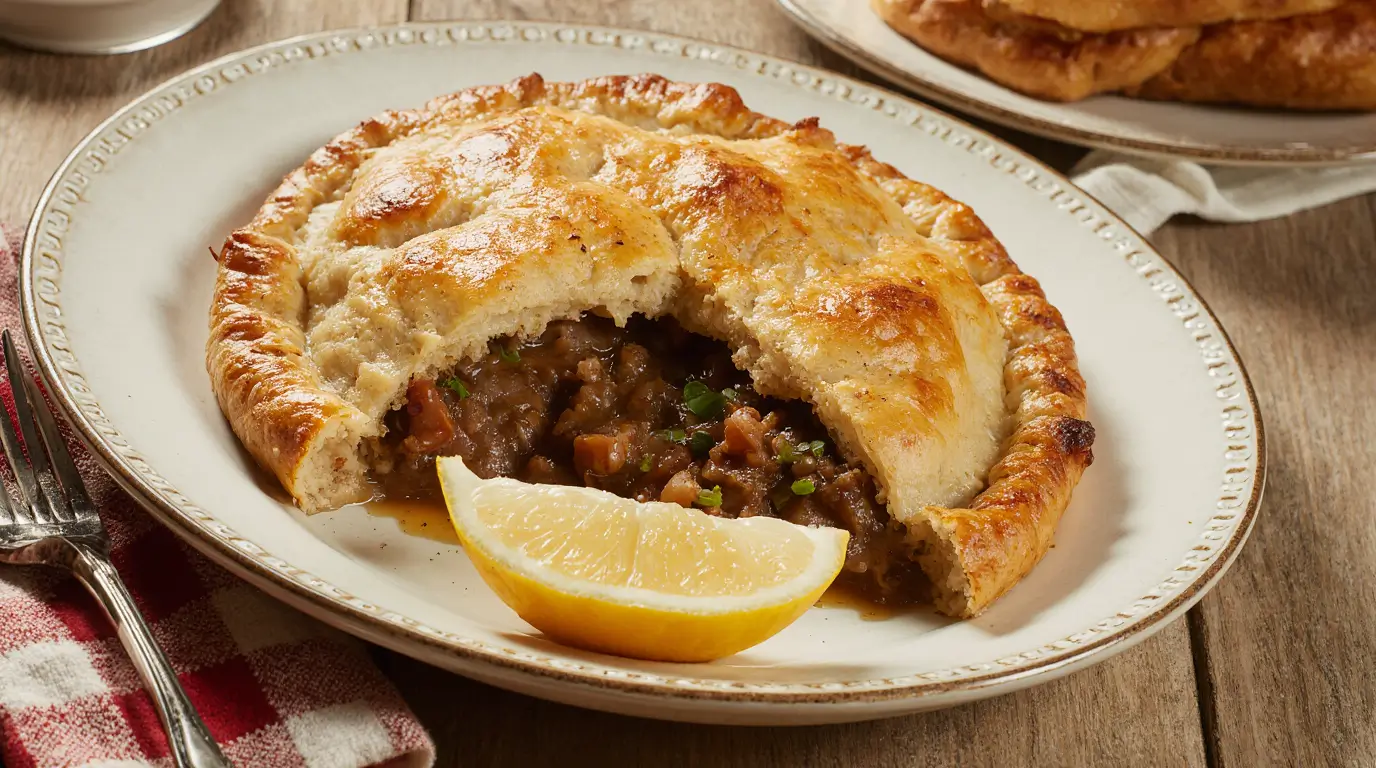
You know that moment when a warm, flaky crust meets a creamy, savory filling and everything feels right again? This is the kind of comfort food that wraps up your day like a hug. You can make it from scratch or blend store-bought elements so it fits your schedule.
With a total time of about 1 hour and 45 minutes, this recipe produces 6–8 servings and is designed to be reliable: 30 minutes of preparation, about 45 minutes of baking at 375°F. Allow it to cool for at least 15 minutes before cutting.
Things are kept straightforward by practical shortcuts. To get a flaky crust, use rotisserie or leftover meat, follow straightforward instructions, and finish with an egg wash so the top becomes golden brown, and the vents keep the pastry from getting soggy.
What you get: ingredient choices, step-by-step method, tips to avoid a soft bottom, storage and freezing advice, plus easy swaps like biscuit or casserole-style toppings. The payoff is a fresher-tasting filling and a crust that actually flakes.
Key Takeaways
- Yields 6–8; Prep 30 minutes; Total about 1 hour 45 minutes; oven 375°F.
- Works with rotisserie, leftover turkey, or poached chicken for quick prep.
- Clear steps and simple shortcuts make this an easy weeknight recipe.
- Egg wash and vents bake to a golden brown top and a crisp crust.
- Tips included for thickness, freezing, and skillet or biscuit variations.
Why You’ll Love This Comfort Food Pot Pie
You’ll love this recipe because it gives you control over seasoning, thickness, and a truly flaky top. Making it at home beats a frozen box when you want a crisp surface and a rich, thick filling. You decide how seasoned the sauce gets and how flaky the crust turns out.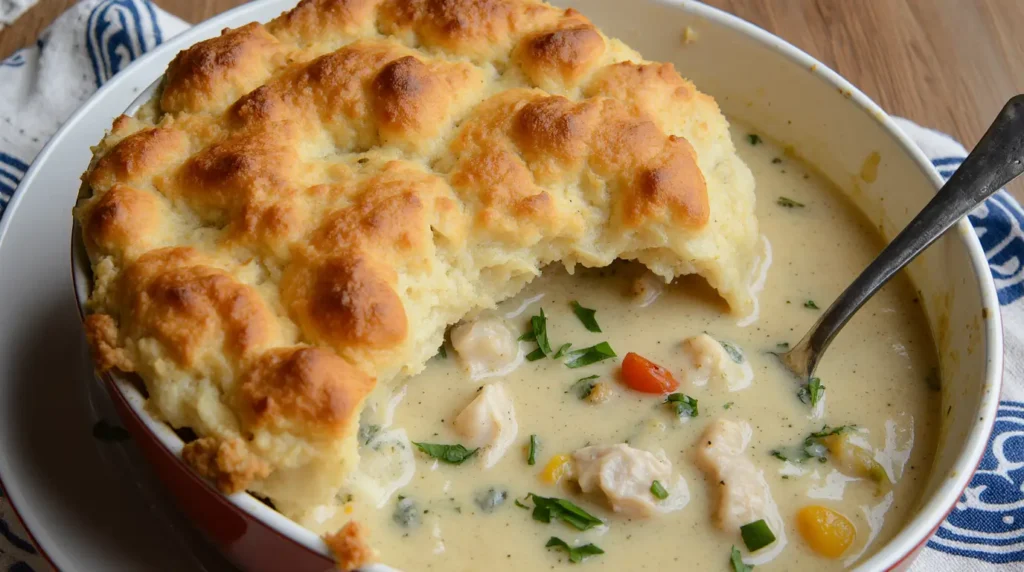 Yields 6–8 servings.
- Prep: about 30 minutes; total time: ~1 hour 45 minutes.
- Bake in a 375°F oven for the golden finish.
This recipe is forgiving. Use a homemade pie crust, a store-bought crust, or puff pastry. Swap in rotisserie or leftover meat and still get a cozy meal.
Make-ahead tips: Dough keeps in the fridge up to 3 days (or freezes for 3 months). Cook meat up to 2 days early. Make the filling a day in advance and cool it before assembling. Cooling protects the bottom and helps with even baking.
Leftovers reheat well in the oven, so you get a quick second meal without starting from scratch. Later sections show fixes for soggy bottoms, thin filling, and uneven heating so you can bake with confidence.
Ingredients for Chicken Pot Pie Filling and Crust
Choose your topping path first — it sets how much time and flake you’ll get.
Crust options
Homemade dough gives the flakiest finish. Use a chilled butter-rich dough for layers. Store-bought pie crust saves time without sacrificing much flavor. (or puff pastry) delivers an ultra-crisp, light top if you want a showy finish.
The thick, creamy base
Make a simple roux: melt butter, stir in flour until golden, then whisk in low-sodium chicken broth cup by cup. Simmer until thick. Stir in heavy cream and taste for salt and pepper. This ratio keeps the filling silky and scoopable.
Vegetables, aromatics, protein, and seasonings
- Vegetables: diced onion, carrots, celery, garlic, and peas add texture and color.
- Herbs: parsley and thyme give a slow-cooked depth.
- Protein: poached breasts, rotisserie meat, or turkey leftovers work well.
- Seasoning: kosher salt, freshly ground black pepper; optional splash of white wine for warmth.
“A simple roux plus low-sodium stock gives you control; add salt at the end.”
| Butter + flour (roux) | 4 tbsp butter, 4 tbsp flour | Cook to golden before adding broth |
| Low-sodium broth | 2 to 3 cups | Whisk in slowly to control thickness |
| Cream | 1/2 to 1 cup | Add at end for richness |
| Veg & herbs | 2 cups mixed vegetables | Onion, carrots, celery, peas, parsley, thyme |
| Protein | 2 to 3 cups diced | Use poached, rotisserie, or leftover turkey |
Storage: Refrigerate for up to 5 days. Freeze baked or unbaked tightly for 2–3 months. For assembly, keep the filling cool so the bottom crust stays crisp when baking.
How to Make Chicken Pot Pie Step-by-Step
A few intentional pauses — chilling dough, cooling the filling — make the difference between soggy and sublime. Start by chilling your dough for at least 30 minutes; cold butter is what gives a flaky crust.
Prep the crust
Roll the pie crust to about 1/4-inch and fit it into a deep 9-inch dish. This gives enough structure for a generous filling.
Build the filling
Sauté onions and carrots in butter over medium heat until soft, about 10 minutes, then add garlic for a minute.
Thicken the mixture
Stir in flour and cook until golden and bubbling, roughly 3 minutes. Gradually whisk in low-sodium broth so the mixture stays smooth.
Finish and assemble
Bring the pot to a boil and cook until the filling thickens, about 5 minutes. Off the heat, stir in cream, diced chicken, peas, and herbs, then cool before filling the crust.
Final steps
Top with the second pie crust, crimp edges, and cut four vents with a sharp knife. Brush with egg wash, then bake in a 375°F oven for about 45 minutes until the top crust is golden. Let rest for at least 15 minutes before slicing.
Recipe Tips for a Golden Top Crust and Thick, Cozy Filling
The quickest way to a flaky, golden brown top is to control the filling before it ever hits the crust.
Avoid a soggy bottom: Your filling should be thick and spoonable when it leaves the stove. If the mixture is still runny, it will soak the pie crust and soften the base.
How to fix thin filling fast
Two reliable paths: cook more flour into the roux early for structure, or use a cornstarch slurry if the filling is already combined. For a slurry, mix 1 Tbsp cornstarch with 2 Tbsp cold water, whisk into bubbling filling, and cook 1–2 minutes until glossy and thick.
Keep the top crust crisp while the center finishes.
Brush the top crust with egg wash and cut vents so steam escapes. Bake until deep golden brown; if edges brown too quickly, tent foil and continue baking until the center is hot and bubbly.
“A spoonable filling and a well-browned top are the twin secrets to clean slices and happy plates.”
| Soggy bottom | Thicken filling to spoonable consistency | Before filling the pie crust |
| Too thin after assembly | Cornstarch slurry (1 Tbsp + 2 Tbsp water) | After filling but before baking |
| Top browning too fast | Tent with foil | Mid-baking to finish center |
Knife and pan tips
Let the dish rest about 15 minutes before slicing so the filling sets. Use a sharp knife to cut clean pieces and a pie server to lift slices with less spillover.
Final seasoning: Taste and adjust salt and pepper on the stovetop — seasoning reads differently after baking, so balance early for best results.
Make-Ahead, Storage, and Easy Variations You Can Try
Staging work across days keeps stress low and results consistent.
Make-ahead plan: Prep dough up to 3 days ahead in the fridge or freeze for months. Cook and chill your chicken up to 2 days earlier. Make the filling a day before, so assembly only takes minutes.
For leftovers, refrigerate the baked dish tightly covered. Reheat slices in a 350°F oven, lightly tented with foil, about 20 minutes until the center is hot and the crust re-crisps.
Freezer options: Wrap a baked or unbaked pie tightly and freeze for 2–3 months. If you bake from frozen, add extra time so the middle reaches heat without burning the top.
Comfort-food twists
- Tater tot topping for a crunchy finish.
- Garlic bread or biscuit-topped casserole for faster assembly.
- Drop biscuits bake at a higher heat (about 425°F) for 30–40 minutes until golden and bubbly.
“Prep smart: do dough, chicken, and filling on separate days to simplify dinnertime.”
| Dough | Up to 3 days refrigerated | Or freeze up to 3 months |
| Chicken | Cook and chill up to 2 days | Use shredded or diced for quick assembly |
| Filling | Make 1 day ahead | Cool before filling to protect pie crust |
Conclusion
Finish strong by focusing on the three reliable elements that make this dish consistent every time.
Thicken the filling until spoonable, vent the top so steam escapes, and bake until the crust is deeply golden. Those three steps protect flavor and give you a sliceable result.
Choose your path—homemade or store-bought crust, poached or rotisserie chicken, classic pie or an easy casserole twist—and repeat the method that fits your week. Readers say, “It was so easy using rotisserie chicken,” and many report the pie turns out wonderfully.
Plan ahead with staged prep, cool briefly before cutting, and consult the tips if the top browns too fast or the filling needs a touch more thickening. This is a repeatable comfort recipe you’ll make again and reheat with confidence.
FAQ
What makes this comforting savory pie worth making at home instead of buying frozen?
Making it at home lets you control the crust, filling thickness, and seasoning. You’ll get a flaky top crust, a rich butter-and-flour roux, and fresh vegetables like onions, carrots, and celery that outshine freezer versions. Using poached or rotisserie protein and low-sodium broth keeps the flavor bright and the salt level in check.
How long does the whole recipe take, including prep and baking?
Total time varies by method: plan for about 20–30 minutes active prep, 20–30 minutes to cook the filling, and 35–45 minutes to bake until golden brown. If you chill the dough or make components ahead, total hands-on time drops significantly.
Can I make the crust ahead of time and freeze it?
Yes. Homemade pie dough can be made up to 3 days ahead or frozen for longer. Wrap it tightly in plastic and aluminum foil. Thaw in the refrigerator before rolling. Store-bought crusts and puff pastry also freeze well and speed assembly on busy nights.
What are the best options for the filling protein?
Use poached breasts, shredded rotisserie chicken, or leftover turkey. Any fully cooked, diced protein works. Choose white meat for a classic texture or dark meat for richer flavor. Just avoid very wet pieces—pat them dry for a thicker filling.
How do I prevent a soggy bottom crust?
Keep the filling thick before you assemble—cook a golden roux (butter + flour) and whisk in cold broth, then reduce until slightly thick. Cool the filling so it’s not piping hot when you add it to the bottom crust. Blind-baking the bottom crust slightly or brushing it with a thin egg wash helps, too.
My filling turned out too thin—how can I thicken it?
For a thin filling, simmer longer to reduce liquid or stir in an extra roux (butter + flour) cooked briefly. A cornstarch slurry (1 tablespoon cornstarch + 1 tablespoon cold water) added to a simmering mixture also thickens quickly without changing flavor.
What oven temp and bake time give a golden, crisp top without burning edges?
Bake at 375°F to 400°F. Start at the higher end for 10–15 minutes, then lower to 350°F if the crust browns too fast. Tent edges with foil if they darken before the center is bubbly. Total bake time is usually 35–45 minutes.
How should I reheat leftovers so the crust stays crisp?
Reheat in a 350°F oven until heated through, about 20–30 minutes for individual portions and longer for a whole pie. Cover loosely with foil, then remove in the last 5–10 minutes to re-crisp the top. Avoid microwaving for the best texture.
Can I freeze the assembled pie, baked or unbaked?
Yes. Freeze unbaked pies for best quality: wrap tightly and bake from frozen, adding extra time. You can also freeze a fully baked pie; thaw overnight in the refrigerator and reheat in the oven to restore crispness. Label with date and bake-from-frozen instructions.
What are easy topping alternatives if I don’t want to roll dough?
Try a biscuit topping (drop biscuit dough over the filling) or use refrigerated puff pastry for a flaky finish. Tater tots or garlic-bread-style crumb toppings make fun comfort-food twists and cut prep time.
Which vegetables work best, and when should peas be added?
A classic mix includes onions, carrots, and celery for the aromatic base. Add frozen peas at the end of cooking and heat through—this preserves their color and texture. Fresh parsley and a touch of thyme brighten the overall flavor.
How do I achieve a shiny, golden top crust?
Brush the top with an egg wash (beaten egg mixed with a tablespoon of water) before baking. For extra shine, add a second light brush midway through baking. That creates the classic golden finish and helps vents brown evenly.
What basic seasonings should I keep on hand to flavor the filling?
Keep kosher salt, freshly ground black pepper, and dried or fresh thyme and parsley handy. Optional boosts include a splash of cream for richness, a little mustard for depth, or a dash of nutmeg in the roux for warmth.
Any tips for cutting clean slices without lots of filling spillover?
Let the pie rest for at least 15–20 minutes after baking to allow the filling to set. Use a sharp knife or pie server and cut with confident, straight motions. Wipe the knife between cuts if needed to keep slices tidy.